
Comprehensive Industry Whitepaper: The Evolution of OEM/ODM Smart Glasses (2026–2030)
The global wearable technology sector is currently experiencing a monumental paradigm shift. As traditional audio hearables and fitness smartwatches converge into unified personal computing hubs, smart glasses have emerged as the primary substrate for spatial computing and ambient artificial intelligence. For global brand owners, importers, system integrators, and enterprise software providers, selecting the right OEM Smart Glasses Manufacturer & Supplier is no longer merely a procurement transaction—it is a critical strategic decision that dictates market entry speed, unit economics, regulatory compliance, and consumer retention.
This industry report provides an exhaustive, engineer-level overview of smart glasses manufacturing methodologies, hardware-software architectural integration, supply chain procurement trends, and rigorous B2B supplier evaluation standards.
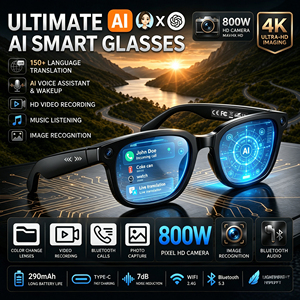
Core Industry Insight: Sourcing smart glasses in 2026 requires moving beyond basic Bluetooth open-ear audio frames. Leading brands are deploying multimodal AI platforms featuring 4K Electronic Image Stabilization (EIS) visual recording, low-power micro-display optics, real-time bi-directional voice translation algorithms, and dynamic transition lenses designed for all-day wearability.
1. Critical Technological Innovations in OEM Smart Glasses Manufacturing
Modern smart eyewear manufacturing combines precision optics, micro-acoustics, specialized semiconductor packaging, and power management technology. When evaluating an OEM partner, hardware engineering leads and procurement officers must analyze five foundational technical modules:
A. Micro-Optical Display & Waveguide Integration
For AR-enabled smart glasses, the optical display system represents the single highest Bill-of-Materials (BOM) cost and design complexity. OEM suppliers offer three primary display architectures:
- Diffractive Waveguides with MicroLED: Provides maximum outdoor brightness (>3,000 nits optical output) with transparency exceeding 85%, essential for industrial heads-up displays (HUD) and outdoor navigation.
- Birdbath Optics with Micro-OLED: Delivers superior color contrast, full 1080p to 4K spatial visual fidelity, and wide Field-of-View (FOV up to 50 degrees), ideal for media consumption, gaming, and remote virtual screen extension.
- Non-Display Micro-Projector Arrays: Lightweight solutions focusing purely on unobtrusive status indicators, LED notifications, and simple prompt displays.
B. Acoustic Beamforming & Open-Ear Sound Isolation
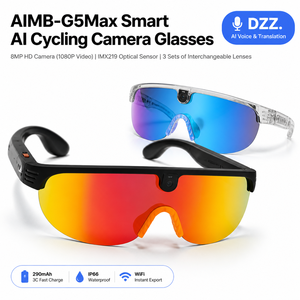
Audio smart glasses rely on advanced directional acoustic wave-guiding to project sound directly into the wearer’s ear canal while minimizing ambient sound leakage. Leading OEM suppliers integrate dual or quad MEMS microphone arrays powered by real-time Neural Network Noise Suppression (NN-NS) algorithms. This guarantees clear two-way communication even in high-noise ambient environments (e.g., outdoor cycling, industrial shop floors).
C. High-Efficiency System-on-Chip (SoC) & Low-Power BLE Stack
Power consumption is the most restrictive physical constraint in smart frame design. Cutting-edge OEM designs leverage 4nm and 6nm low-power wearable SoC platforms (such as Qualcomm Snapdragon AR series or customized BES dual-mode Bluetooth silicon). Efficient power management units (PMU) permit dynamic power scaling, enabling 6 to 12 hours of continuous active use (audio streaming/AI voice interaction) and up to 7 days of standby on ultra-lightweight 110mAh–220mAh lithium-polymer pouch batteries.
2. Key B2B Procurement Trends in the Smart Eyewear Supply Chain
As consumer expectation shifts toward seamless fashion-tech fusion, procurement dynamics are changing rapidly across North American, European, and Asia-Pacific markets. Global importers must align their product roadmaps with the following four macro trends:
Trend 1: On-Device + Cloud Hybrid AI (ChatGPT & LLM Orchestration)
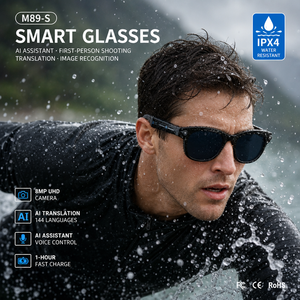
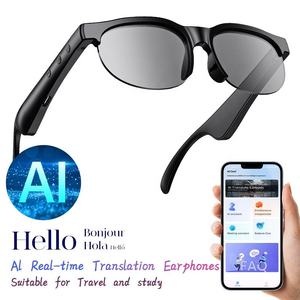
Hardware without intelligent software commentary is rapidly becoming obsolete. The current generation of OEM smart glasses comes pre-integrated with SDKs bridging local micro-controllers to cloud-hosted Large Language Models (LLMs). Wearers can capture photos via an onboard 8MP or 4K camera and instantly request voice analysis: "Identify this botanical species," "Translate this menu in real-time," or "Summarize this document." OEMs providing turnkey iOS/Android app white-label solution shorten time-to-market by up to 70%.
Trend 2: Modular Tooling & Rx Prescription Lens Compatibility
Unlike standard consumer electronics, eyewear must fit a wide range of human craniofacial structures and optical prescriptions. Leading OEM suppliers utilize modular frame architecture. This allows brand owners to swap outer frame fronts (e.g., Wayfarer, Aviator, Sports Shield) onto a single standardized electronic temple core. Furthermore, optical grooves are engineered for standard optical shop beveling, supporting prescription lenses, polarized UV400 lenses, and photochromic electrochromic transition lenses.
Trend 3: Enterprise AR Deployment in Logistics & Healthcare
Beyond consumer retail, OEM smart glasses are witnessing exponential growth in B2B enterprise sectors. Hands-free scanning, remote video assistance, step-by-step assembly guidance, and patient record retrieval require enterprise-grade hardware featuring IP67 dust/water resistance, hot-swappable magnetic battery pods, and MDM (Mobile Device Management) software compatibility.
3. Technical Evaluation Matrix: Comparing OEM Smart Glasses Classes
To assist procurement managers in choosing the right specification tier for their target customer demographics, the matrix below details key hardware parameters across our OEM product tiers:
| Feature Category | Audio & Voice Smart Glasses | AI Camera & Vision Glasses | Full AR Waveguide Glasses |
|---|---|---|---|
| Target Application | Daily Wear, Calls, Music, Voice Assistant | Vlogging, AI Visual Search, Translation | Industrial HUD, Gaming, Spatial Computing |
| Optical Engine | None (Standard Lens Groove) | None / Basic LED Indicator | MicroLED / Micro-OLED Waveguide |
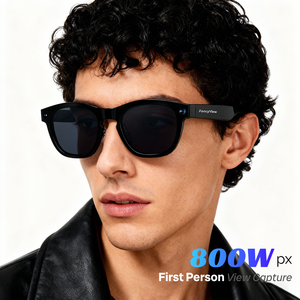
| Camera Module | N/A | 1080P to 4K EIS Anti-Shake | 8MP RGB + Dual SLAM Spatial Sensors |
| Battery Capacity | 80mAh – 140mAh per side | 150mAh – 280mAh integrated | 250mAh – 450mAh magnetic quick-swap |
| Weight Range | 32g – 42g (Ultra Lightweight) | 48g – 58g (Fashion Ergonomic) | 65g – 85g (Enterprise Grade) |
| Connectivity Stack | BLE 5.3 / 5.4 Dual Mode | BLE 5.3 + Wi-Fi 6 (Video Transfer) | Wi-Fi 6E + Low-Latency Proprietary RF |
| Waterproof Rating | IPX4 – IPX7 Waterproof | IP65 – IP67 Sealed Engineering | IP67 Industrial Standard |
4. Institutional E-E-A-T Capabilities: Manufacturing Infrastructure & Quality Control
Leveraging deep industrial expertise, acoustic lab infrastructure, and high-precision SMT production lines, our manufacturing ecosystem provides unparalleled Reliability, Professional Expertise, and Quality Assurance. Our turnkey ODM/OEM service flow spans from industrial design (ID) sketch to mass production delivery:
- Acoustic & RF Chamber Calibration: Every frame design undergoes full-spectrum acoustic frequency analysis in anechoic chambers to eliminate harmonic distortion, maximize acoustic isolation, and fine-tune antenna gain for seamless 30-meter wireless stability.
- Structural Ergonomics & Biocompatibility: We utilize medical-grade TR90 memory resin, ultra-light titanium alloys, and skin-friendly acetate materials tested against ISO 10993 skin sensitization and cytotoxicity benchmarks.
- Comprehensive Quality Assurance Protocols: Finished products undergo 100% automated optical inspection (AOI), 5,000-cycle temple flex testing, micro-drop resistance tests from 1.5 meters, thermal shock testing (-20°C to 60°C), and continuous salt-spray corrosion tests for sweating environments.
- Global Regulatory & IP Compliance: We manage full international certification filings including FCC, CE, TELEC, KC, PSE, RoHS, REACH, and UN38.3 battery transport safety standards, shielding our brand partners from legal and compliance friction.