As consumer expectations shift rapidly toward self-luminous display clarity, real-time health telemetry, and multi-week operational longevity, global consumer electronics brands, regional importers, and enterprise distributors face severe technical friction. Sourcing high-performance hardware requires navigating complex component trade-offs between active-matrix organic light-emitting diode (AMOLED) driver chips, optical sensor fusion accuracy, and battery discharge curves. As China's leading Tier-1 wearable R&D and production ecosystem, our manufacturing facilities bridge the gap between architectural innovation and mass-market scalable supply.
Explore our factory-direct OEM catalog engineered for global distribution, compliant with CE, FCC, RoHS, and TELEC standards.
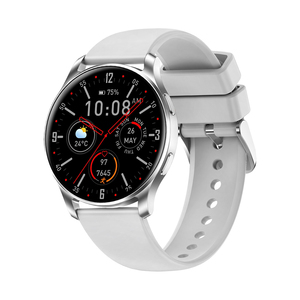
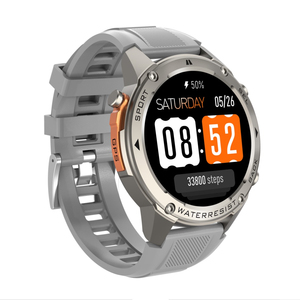
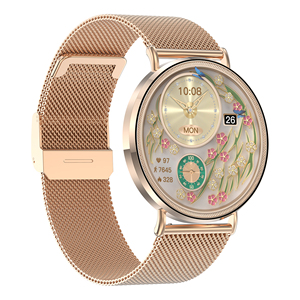
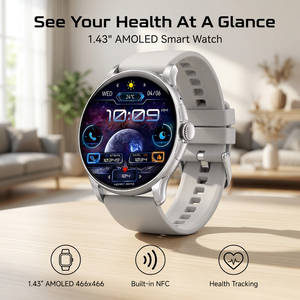
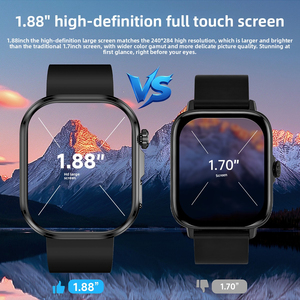
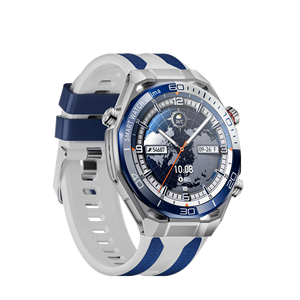
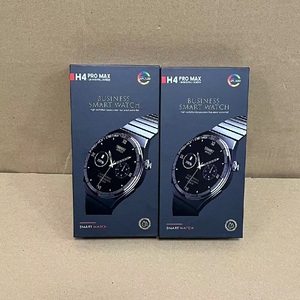
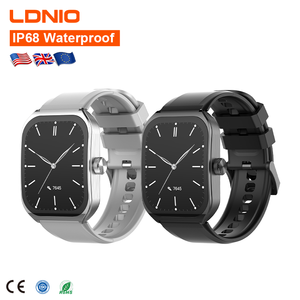
When auditing smart wearable suppliers in China, B2B procurement directors must understand the fundamental physical differences between traditional Liquid Crystal Displays (TFT-LCD) and Active-Matrix Organic Light-Emitting Diode (AMOLED) panels. Unlike LCDs that require a continuously powered backlight unit (BLU)—which drains up to 65% of a smartwatch’s battery capacity—AMOLED pixels are self-luminous. Each sub-pixel emits its own light, allowing true pixel-level black states (0.0001 nits luminance) by simply turning off individual organic compounds.
1. Contrast Ratio & Direct Sunlight Readability: AMOLED panels produce an infinite static contrast ratio (>100,000:1) compared to LCD's typical 1,000:1. Paired with peak outdoor luminance reaching 600 to 1,000 nits, users maintain crystal-clear readability under ambient sunlight.
2. Always-On Display (AOD) Power Efficiency: Because dark pixels consume zero power, implementing AOD watch faces in AMOLED models consumes less than 1.2% battery per hour, enabling continuous time rendering without compromising multi-day operational life.
3. Z-Axis Space Savings: Eliminating the backlight layer reduces module thickness by 0.8mm to 1.2mm. This space is repurposed by our mechanical engineers to expand battery capacity from standard 260mAh cells to 500mAh–800mAh high-density Li-Po batteries.
Our 2026 AMOLED smartwatch generation integrates multi-channel Photoplethysmography (PPG) optical sensor arrays. By emitting green (525nm) and infrared (940nm) wavelengths through glass optical windows, microprocessors capture peripheral arterial blood volume oscillations with pinpoint accuracy.
Algorithmically tuned via machine learning models trained on 10,000+ clinical telemetry data points, our hardware filters out motion artifacts during high-intensity interval training (HIIT), enabling accurate real-time heart rate monitoring, SpO2 oxygen saturation calculations, systolic/diastolic blood pressure estimation, and sleep architecture tracking (REM, Deep, Light).
Use this spec guide to select optimal inventory for your regional consumer demographic.
| Specification Model | Display Matrix | Battery & Battery Life | Waterproof Rating | Special Capabilities | Ideal Target Segment |
|---|---|---|---|---|---|
| TKYUAN 1.32 Fitness | 1.32" AMOLED (390x390) | 300mAh (5–7 Days) | IP68 (50m Splash Proof) | Female Health Cycle Tracking | Fashion & Female Fitness |
| BT Calling 500mAh Sport | 1.43" AMOLED (466x466) | 500mAh (10–14 Days) | IP68 Waterproof | GNSS Multi-GPS Receiver | Outdoor Endurance & Athletes |
| KM88 Ultra-Thin Alloy | 1.32" AMOLED (390x390) | 280mAh (5 Days) | IP67 Waterproof | Aircraft Alloy CNC Casing | Corporate Gifting & Office Wear |
| Flagship 1.43 HD NFC | 1.43" HD AMOLED (466x466) | 400mAh (7–10 Days) | IP68 Commercial Seal | Multi-NFC Card Emulation | Urban Tech Enthusiasts |
| SK55 Wireless Charge | 1.43" AMOLED (466x466) | 450mAh (7 Days) | IP68 Waterproof | Magnetic Qi Wireless Coil | Executive & Premium Retail |
| LDNIO SW04 Large Screen | 1.96" Rectangular AMOLED | 410mAh (7–9 Days) | IP68 Hydro-Proof | Expanded UI & Bluetooth 5.3 | Mass Market Value Buyers |
The smart wearable industry is undergoing a structural transformation. Distributors moving away from low-margin basic wristbands toward high-margin AMOLED smartwatches must align their procurement strategies with four key market forces over the next five years:
Next-generation smartwatches are transitioning from simple threshold sensors to on-device neural processing units (NPUs). Advanced algorithms run offline locally on low-power SOCs to detect irregular cardiac rhythms (Afib), sleep apnea patterns, and stress spikes before syncing data to the cloud.
Single-band GPS suffers from urban canyon signal degradation. Modern outdoor AMOLED sports watches integrate dual-frequency L1 (1575.42 MHz) and L5 (1176.45 MHz) GPS, GLONASS, Galileo, and BeiDou tracking, achieving sub-meter route plotting precision even under dense forest canopy or skyscraper shadows.
B2B procurement is expanding beyond consumer retail into corporate wellness programs, insurance risk assessments, and hospital remote patient monitoring (RPM). Wholesalers require platforms with accessible SDKs, Bluetooth LE broadcast modes, and custom API endpoints for enterprise server integration.
As an established technology pioneer serving tens of millions of users across 100+ countries, our manufacturing footprint provides an unshakeable competitive foundation for global brand partners. Operating ISO9001 and ISO14001 certified manufacturing facilities, we control the entire lifecycle of wearable production: from Industrial Design (ID) and Mechanical Engineering (ME) to SMT PCB layout assembly and custom firmware compilation.
Our integrated quality control laboratory subjects every production lot to rigorous environmental testing. Devices undergo 48-hour thermal shock cycles (-20°C to 60°C), 50-meter hydrostatic pressure testing, salt spray corrosion tests for metal buckles, and 10,000-cycle button actuation fatigue testing. This relentless dedication to precision ensures our partners maintain an industry-leading return rate of less than 0.3%.
Critical insights for international importers, channel distributors, and procurement teams.