Engineered for global brand owners, importers, and B2B distributors seeking certified accuracy, custom firmware, and robust supply chain scalability.
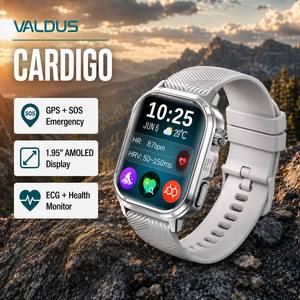
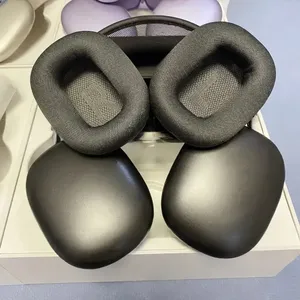
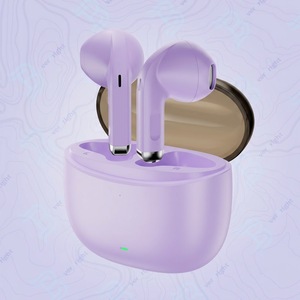
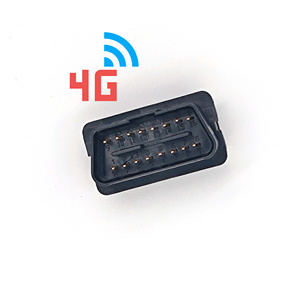
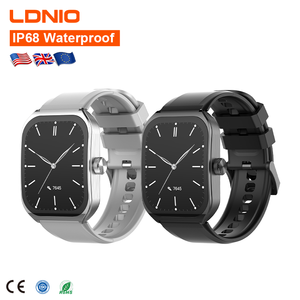
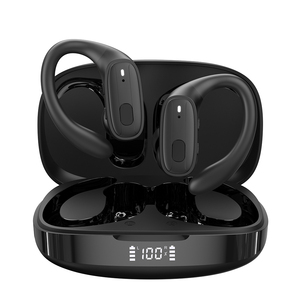
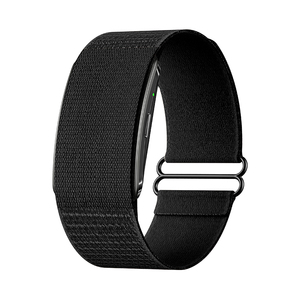
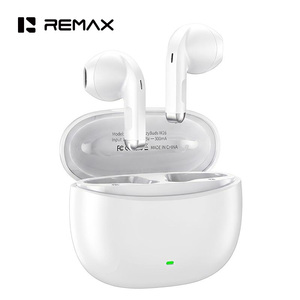
The landscape of consumer electronics sourcing has undergone a fundamental paradigm shift. Global brand managers, telecommunication operators, medical device distributors, and enterprise health providers are no longer merely seeking low-cost assembly lines; they demand high-precision biological data capture, architectural SDK flexibility, and institutional-grade OEM/ODM manufacturing standards. China has established itself as the undisputed global hub for health smartwatch production, integrating complex semiconductor supply chains, SMT (Surface Mount Technology) cleanrooms, optical sensor calibration laboratories, and proprietary algorithmic development under unified industrial clusters in Shenzhen, Dongguan, and the Greater Bay Area.
As a leading China health smartwatch exporter and factory ecosystem partner, our enterprise leverages over a decade of technological convergence across wireless audio, micro-electro-mechanical systems (MEMS), and biometric monitoring devices. Serving tens of millions of end-users across 100+ countries, our manufacturing philosophy revolves around one unyielding engineering directive: combining medical-grade data integrity with consumer-grade battery longevity and aesthetic elegance.
B2B Procurement Insight: The competitive edge in 2026 smart wearable sourcing lies in Information Gain—understanding how multi-channel Photoplethysmography (PPG) optical arrays, ECG signal amplification chips, and AI-driven arterial stiffness algorithms translate into defensible market positions for private-label brand owners.
When selecting a China wholesale health smartwatch factory, procurement teams must evaluate manufacturers based on their mastery over four fundamental pillars: biological sensor signal processing, low-power system-on-chip (SoC) firmware optimization, industrial enclosure protection (5ATM/IP68), and end-to-end data security compliance (including GDPR and HIPAA readiness for telemetry pipelines).
To successfully capture market share in competitive regional jurisdictions, commercial buyers must stay ahead of rapid technological evolution. The health smartwatch industry is moving beyond basic step counting toward predictive, continuous, and non-invasive physiological monitoring.
Integration of single-lead and multi-lead Electrocardiogram (ECG) sensors with multi-wavelength (Green, Red, Infra-Red) Photoplethysmography (PPG) modules to capture real-time Atrial Fibrillation (AFib), Pulse Wave Velocity (PWV), and early cardiac arrhythmia indicators.
Transitioning from intermittent manual spot-checks to automated 24/7 reflective SpO2 pulse oximetry, blood pressure trend estimation via Transit Time (PTT) calculations, and non-invasive metabolic trend analysis optimized by machine-learning neural networks.
Deployment of low-power ARM Cortex-M33 architecture combined with dedicated Neural Processing Units (NPUs). This enables edge-AI processing directly on the wrist, reducing Bluetooth telemetry overhead while dramatically improving battery life up to 30 days.
When customizing products under white-label contracts, understanding technical hardware metrics is essential for establishing pricing tiers and targeting accurate consumer segments. Below is an engineering overview comparing standardized consumer trackers with high-tier medical-OEM smartwatch platforms produced in our factories:
| Architecture Component | Entry-Level Wholesale Tracker | Flagship Health Smartwatch (ODM) | Enterprise Medical/Telehealth Grade |
|---|---|---|---|
| Optical PPG Array | Single Green LED (2-Point Sensor) | Multi-LED 8-Channel Optical Matrix | Dual-Wavelength PPG + Infrared Thermal Sensing |
| Cardiac Analytics | Basic Heart Rate (BPM) | HRV + Real-Time ECG + AFib Detection | Continuous PWV, Arrhythmia & Stress Telemetry |
| Display Technology | 1.47" TFT LCD (240x280) | 1.96" HD AMOLED (410x502, Always-On) | Sapphire Crystal Glass + Ultra-Bright AMOLED |
| Positioning & GPS | Connected Phone GPS | Built-in Dual-Frequency GNSS (L1+L5) | Multi-Constellation GPS/GLONASS/Galileo + OBD module |
| SDK & Data Integration | Closed App Ecosystem | Open API + Custom App Rebranding | SDK for Cloud Health Systems (FHIR/HL7 Ready) |
As the international smart wearable market expands, procurement strategies are shifting dramatically. Corporate buyers, health insurance providers, and consumer electronics distributors are redefining their relationships with Chinese manufacturing partners.
Historically, B2B sourcing involved selecting pre-existing catalog items and applying private-label branding. Today, high-margin brand success relies on Deep ODM Co-Development. Buyers work directly with factory firmware teams to build tailored user interfaces (UI), unique mechanical housing profiles (utilizing aviation-grade aluminum, titanium, or ceramic bezels), and custom algorithmic thresholds adapted to target demographic profiles.
Modern health smartwatches are vital endpoints in broader IoT and enterprise health networks. Commercial buyers increasingly demand factory-supported Software Development Kits (SDKs) for iOS and Android, alongside BLE raw data protocols. This allows corporate clients—such as insurance companies managing wellness programs, remote patient monitoring (RPM) platforms, and athletic performance organizations—to ingest real-time bio-telemetry directly into their proprietary cloud systems without reliance on third-party servers.
European and North American importers face stringent legislative requirements regarding supply chain transparency. Top-tier China smartwatch factories lead this transition by implementing eco-friendly packaging, halogen-free PCB manufacturing, RoHS and REACH chemical compliance, and carbon-neutral automated assembly lines certified under ISO14001 standards.
Rooted in the core engineering heritage of official smart wearable leaders (spanning global product distribution across 100+ countries), our manufacturing hubs set the industry standard for OEM/ODM excellence. Our production infrastructure guarantees absolute precision from raw silicon assembly to final water-immersion testing.
Complete control over PCBA layout design, high-density SMT placement, RF antenna optimization (Bluetooth 5.3/5.4, NFC, GPS), and industrial tooling. We maintain Class 10,000 cleanroom environments for optical sensor bonding.
Every batch undergoes stringent testing protocols: 5ATM hydrostatic pressure chamber immersion, 10,000-cycle button actuation, thermal shock (-40°C to +70°C), salt spray anti-corrosion testing, and automated darkroom display calibration.
Full support for international regulatory certifications including CE, FCC, RoHS, KC, TELEC, and BIS. Direct export channels with structured after-sales warranty processing networks safeguard your brand's regional reputation.
Essential answers regarding custom manufacturing, minimum order quantities (MOQs), firmware SDKs, and quality control standards.
For standard wholesale ordering of existing factory models with neutral packaging, MOQs start as low as 100 to 500 units. For custom OEM branding (logo laser engraving, customized gift box packaging, and pre-loaded brand watch faces), the standard MOQ is typically 1,000 units. For full ODM projects requiring custom mechanical mold tooling and bespoke PCBA engineering, MOQs generally start at 3,000 to 5,000 units depending on component specification complexity.
Biometric accuracy is ensured through multi-stage calibration. During assembly, optical sensors are placed on automated light-absorption simulators to verify signal noise ratios (SNR). Algorithmically, raw optical signals are filtered using adaptive motion-cancellation algorithms (canceling artifact noise during intense physical workout). Furthermore, comparison testing is continuously performed against institutional gold standards (such as Holter ECG monitors and medical chest straps).
Yes. We provide comprehensive Native iOS (Swift/Objective-C) and Android (Java/Kotlin) SDKs for enterprise client projects. The SDK documentation includes Bluetooth peripheral API wrappers, raw data packet parsing for optical sensor feeds (PPG/ECG/Accelerometers), historical sync protocols, and step-by-step sample integration code for seamless telemetry cloud onboarding.
Our strategic manufacturing facilities hold ISO9001 (Quality Management) and ISO13485 (Medical Device Quality Management) certifications. Individual product lines are fully certified for export to global territories, carrying CE-RED (Europe), FCC (United States), RoHS (Hazardous Substances), REACH (Chemical Compliance), and specialized regional marks such as TELEC/MIC (Japan) and KC (South Korea).
Sample orders for existing factory units are dispatched within 3 to 5 business days. Customized OEM orders with custom packaging and logo silkscreening take approximately 18 to 25 calendar days for production completion. Deep ODM projects requiring new tooling engineering, molding, firmware customization, and certification testing typically follow a 45-to-60-day roadmap from concept freeze to mass production assembly.
We provide a structured 12-to-24 month factory warranty policy on all smart wearable shipments. For B2B clients, we offer two main RMA support structures: supplying a 1% spare units allowance with bulk orders for immediate customer swap, or maintaining a centralized factory repair/replacement protocol managed via our dedicated online B2B warranty service portal.
Absolutely. We offer complete application re-skinning and white-labeling services. This includes changing app icons, color palettes, onboarding screens, domain endpoints, and privacy policy links. The app can be compiled and published directly under your company's official Apple App Store and Google Play Store developer accounts.
Accelerate your brand's growth with high-precision biological tracking devices, competitive direct-from-factory pricing, and complete OEM/ODM engineering support.
Get a Quote