Explore our export-ready wholesale collection featuring cutting-edge acoustic architecture, multi-sensor integration, and premium industrial build quality.

The global consumer acoustics landscape has undergone a monumental shift toward high-resolution wireless transmission, dynamic active noise cancellation (ANC), and intelligent context-aware audio algorithms. As the premier manufacturing powerhouse, China's audio OEM/ODM infrastructure has evolved beyond simple assembly. Today, leading facilities represent integrated electroacoustic hubs combining advanced SMT (Surface Mount Technology), automated acoustic calibration, and proprietary Bluetooth protocol stack development.
For international buyers, retail brands, and enterprise importers, sourcing directly from an established China audio earphones factory offers unmatched economies of scale, technological agility, and comprehensive supply chain control. Modern electroacoustic factories no longer just assemble components; they design proprietary acoustic cavities, engineer custom dynamic driver diaphragms (utilizing DLC, titanium coating, and bio-cellulose materials), and fine-tune Digital Signal Processors (DSP) for zero-latency audio-video synchronization.
Understanding user intent and consumer preferences across tier-1 North American, European, and Asian markets requires a manufacturing partner who maintains rigorous compliance standards (ISO9001, ISO14001, BSCI) alongside cutting-edge R&D capabilities. By bridging smart wearables with wireless audio, our manufacturing framework delivers market-ready devices that consistently outperform benchmark industry standards.
Our OEM/ODM products are deployed across more than 100 countries, meeting regional compliance certifications including FCC, CE, RoHS, Telec, and KC.
Equipped with ultra-wideband dynamic drivers, LDAC codec authorization, and sub-second DSP tuning to deliver studio-grade acoustics.
From injection molding, SMT chip placement, and ultrasonic shell welding to final automated soundboard testing, every step is handled in-house.
As the wireless audio industry enters its next phase of maturity, procurement directors and brand owners must align their product roadmaps with key technological inflections. Sourcing static, legacy TWS earphones is no longer sufficient to secure retail margin or consumer loyalty. Buyers must evaluate factories based on their readiness across five transformative trend pillars:
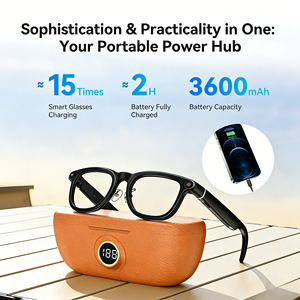
The integration of micro-AI chipsets into open-ear headphones and smart glasses enables real-time acoustic scene adaptation, live translation, and voice-activated AI assistant connectivity (such as ChatGPT and native LLMs). Factories capable of embedding camera modules, dual anti-shake algorithms, and magnetic fast-charging systems directly into wearable optical frames are opening new high-margin retail categories.
Next-generation Active Noise Cancellation has surpassed simple feedforward algorithms. Market leaders require multi-core DSP architectures executing hybrid feedforward plus feedback ANC, paired with AI environmental noise suppression (ENC) for crystal-clear beamforming microphone calls. Peak noise reduction depth has reached -54dB, effectively neutralizing low-frequency turbine rumble and ambient office chatter alike.
Smart touch-screen charging cases represent a major user-experience leap. By placing full-color AMOLED or high-resolution LED touch panels on the exterior of charging cases, users can toggle EQ presets, control media playback, track battery telemetry, and locate misplaced earbuds without unlocking their primary mobile device. This feature significantly boosts perceived product value for wholesale buyers.
The transition to Bluetooth 5.4 and LC3 codecs allows for dramatically lower power consumption, higher bandwidth efficiency, and native support for Auracast™ location-based audio sharing. Wholesale buyers should prioritize factories offering multi-device dual-connection switching, low-latency gaming modes (under 30ms), and energy-dense battery configurations that yield up to 100 total hours of playback.
Consumer fatigue from traditional in-ear silicone tips has accelerated demand for open-ear (OWS) directional audio and bone conduction solutions. Advanced directional soundtube technology minimizes sound leakage while leaving the ear canal open, addressing both safety for outdoor sports and long-duration workplace comfort.
To assist international procurement managers in performing technical vendor evaluations, the table below outlines our standardized manufacturing benchmarks across core product categories:
| Category Segment | Acoustic / Hardware Architecture | Wireless Protocol | Battery / Playtime | Quality Benchmark (AQL) |
|---|---|---|---|---|
| Hybrid ANC Earbuds | 12.4mm Titanium Dynamic Driver + Multi-MEMS Mic Array (-54dB) | Bluetooth 5.4 / LDAC / Hi-Res Wireless | 8h Single / 40h Case (Fast Charge) | Critical 0, Major 0.65, Minor 1.5 |
| Smart Touch Screen TWS | 10mm DLC Diaphragm + Integrated Case Touch Panel | Bluetooth 5.3 + Dual-Mode Audio | 6h Single / 30h Case Display | Critical 0, Major 0.65, Minor 1.5 |
| AI Smart Audio Glasses | Open-Ear Directional Speaker + 4K Anti-Shake Camera | BT 5.4 + Wi-Fi Direct (Media Offload) | 4h Active Recording / Magnetic Dock | Critical 0, Major 0.40, Minor 1.0 |
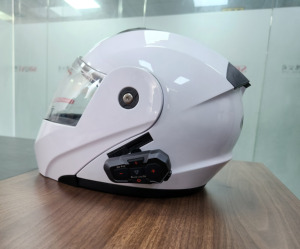
| Group Intercom Headsets | High-Noise Suppression Dynamic Mic + 1000m Mesh Radio | Dual-Chip Bluetooth Intercom (6-Rider) | 28h Continuous Talk Time | Critical 0, Major 0.65, Minor 1.5 |
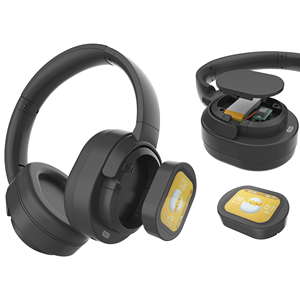
| Over-Ear Wireless Headphones | 40mm Bio-Cellulose Driver + 360° Spatial Position Sensor | BT 5.4 / Low Latency (25ms) / Wired 3.5mm | Up to 100h (ANC Off) / 60h (ANC On) | Critical 0, Major 0.65, Minor 1.5 |
Every product batch undergoes strict 100% electroacoustic frequency response testing via SoundCheck and AP (Audio Precision) analyzers. Shell integrity is validated using IPX-level hydrostatic pressure chambers and automated drop-test rigs.
Leveraging years of specialized acoustic development, modern infrastructure, and deep international logistics experience, our facility provides complete end-to-end services tailored for global importers, brand creators, and enterprise clients.
Our high-speed Yamaha and Panasonic SMT lines ensure micro-soldering precision for Bluetooth ICs, PMUs, and sensor modules with an industry-leading defect rate below 50 PPM.
From incoming material inspection (IQC) to in-process quality control (IPQC) and final pre-shipment auditing (OQC), every batch undergoes strict acoustic curve verification.
We provide full software customization including bespoke iOS/Android companion apps, custom Bluetooth broadcast names, localized EQ presets, and tailored voice prompts.
We streamline the custom production process to guarantee rapid time-to-market without sacrificing structural or electrical integrity:
Find authoritative answers regarding our manufacturing minimum orders, OEM customization terms, testing protocols, and international export policies.
For standard wholesale orders with neutral factory packaging, our MOQ starts as low as 100 units per model. For custom OEM projects—including laser-engraved logos, custom color matching (Pantone), customized firmware prompts, and retail box printing—our baseline MOQ is generally 1,000 units. Flexible tier arrangements are available for emerging enterprise partners.
We employ 100% automated acoustic inspection on every production line using industry-standard SoundCheck hardware. Frequency response curves, Total Harmonic Distortion (THD < 0.5% at 1kHz), left-right channel balance (within ±1dB), and ANC attenuation depth are programmatically verified. Earphones failing strict tolerance curves are automatically ejected prior to final packaging.
Yes. All earphone and charging case batteries are equipped with hardware protection circuit modules (PCM) preventing overcharge, over-discharge, and short-circuit conditions. Complete documentation packages—including UN38.3 test reports, 1.2m drop test certificates, MSDS sheets, and Sea/Air Transport Safety Declaration reports—are provided with every shipment.
Evaluation samples and unbranded prototype units ship within 2 to 4 business days. Custom OEM sample preparation (with logo printing and customized software) takes approximately 7 to 10 days. Full-scale mass production lead times typically range from 20 to 30 calendar days following final sample approval and deposit confirmation.
Absolutely. We maintain direct relationships with accredited international testing laboratories (such as SGS, TÜV, and Intertek). We proactively design products to satisfy CE-RED, FCC ID, RoHS 2.0, REACH, Telec (Japan), and KC (Korea) standards, simplifying the filing process for your brand.