Choosing the best Open-Ear Sports Headphones begins with one practical question: can you hear your music without losing awareness of your surroundings?
Shokz founder Wang Shao describes the concept clearly: “You can hear music and the world at the same time.” That idea matters on busy streets, wooded trails, and crowded gym floors. However, awareness is not a safety guarantee. Traffic noise, wind, and loud crowds can still hide important sounds. Your attention remains essential.
A reliable choice should fit your actual routine, not just an attractive product page. During a run, check whether the headphones stay stable when sweat reaches your temples. On a bike ride, notice whether wind overwhelms voices or podcasts. For gym sessions, examine the controls with damp fingers. Small details often matter more than impressive bass claims.
Look for a comfortable clamp, clear microphones, dependable Bluetooth performance, and enough battery life for your longest workout. An IP rating can indicate resistance to water or sweat, but it does not make every device waterproof. Also check volume behavior. Open-ear designs leak sound by nature, and high volume may still stress your hearing.
Independent reviews, warranty terms, and return policies add useful evidence. Specifications alone do not prove comfort. Marketing can oversimplify.
I would test before committing, if possible. Try ten minutes first. Then move.
The best Open-Ear Sports Headphones should disappear during movement while preserving useful environmental awareness. Yet preferences differ. Head shape, glasses, hair, weather, and music habits can change the experience considerably. A thoughtful comparison should admit that uncertainty, rather than promise one perfect model for everyone.
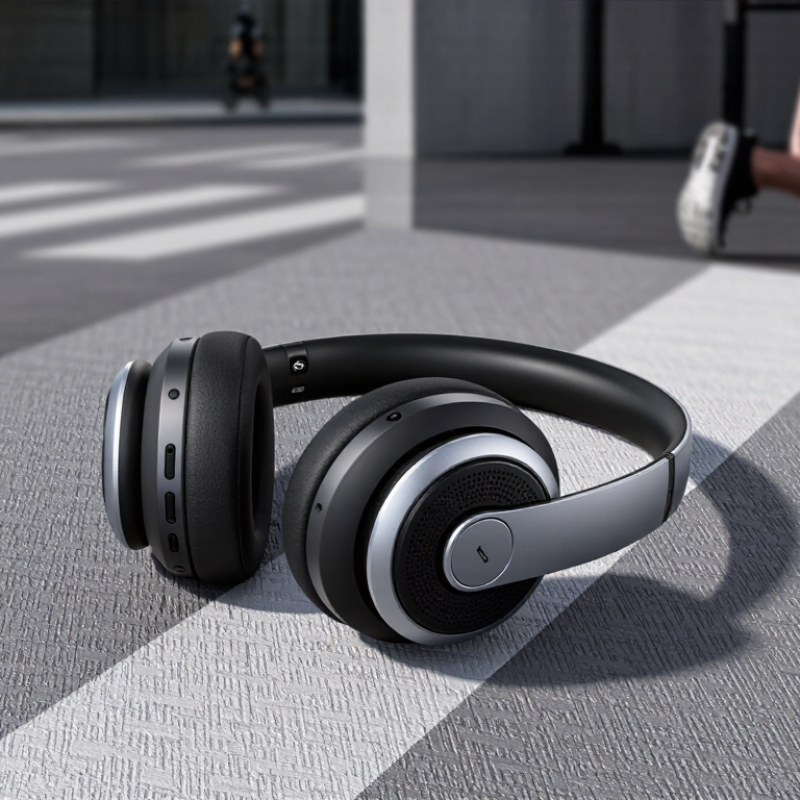
Choosing open-ear sports headphones starts with understanding how they deliver sound. Air-conduction models use small speakers near the ears, sending sound through the air without sealing the ear canal. They usually provide clearer vocals and stronger musical detail. However, wind and traffic can compete with the audio during outdoor training. Sound leakage may also bother people nearby. Keep the volume moderate.
Bone-conduction models work differently. They rest near the cheekbones and send vibrations through the skull toward the inner ear. Your ear canals remain uncovered, which can help you notice cyclists, cars, or coaching instructions. The sound may feel less natural, especially with deep bass. Some users also notice a mild buzzing sensation at higher volumes. It can take time to adjust.
I used to assume bone conduction was automatically safer. That was too simple. Hearing remains exposed to loud environmental noise, and excessive volume can still create risk. Fit matters as much as technology. During running, check whether the contact points stay stable when you turn your head or sweat heavily. For cycling, test both types near ordinary road noise before buying. A sports hearing specialist can offer better guidance if you have hearing loss, ear sensitivity, or persistent discomfort. Personal preference matters, but it should follow practical testing rather than attractive specifications.
This comparison uses a relative 1–5 technology profile, where higher scores indicate a stronger advantage for the listed sports-use criterion. Air-conduction models send sound through the air toward the ear, while bone-conduction models transmit vibrations through the cheekbones and leave the ear canals open. Actual performance can vary with fit, volume, wind, and the surrounding environment.
How to Choose the Best Open Ear Sports Headphones
Match Sports and Weather Needs Using IEC 60529 IP Ratings
Open ear sports headphones should match your training environment, not just your playlist. The IEC 60529 IP code measures protection against solids and water. Its first digit covers dust and particles. Its second digit covers moisture. For example, IP55 means limited dust protection and resistance to water jets. The “X” in IPX4 means the solid-particle test was not provided or stated.
For light gym sessions, IPX4 can handle splashes and sweat from several directions. Outdoor runners may prefer IPX5 or IPX6 when rain becomes heavier. IPX7 is tested for temporary immersion, but it does not automatically prove protection against strong water jets. Look for separate ratings, such as IPX5/IPX7, when both conditions matter. Dusty cycling paths require attention to the first digit. IP5X offers dust protection, while IP6X is dust-tight under IEC testing.
Fit still matters.
Check the manufacturer’s test conditions and care instructions. Salt, shampoo, and repeated charging-port exposure may create risks that an IP test does not fully represent. A rating describes controlled laboratory performance, not every real training day. I once underestimated sweat during a long summer ride; the headphones survived, but the charging contacts needed careful drying afterward. That experience changed my choice. Select the rating for your hardest regular conditions, and keep water-resistant headphones away from deliberate submersion unless immersion protection is clearly specified.
| IEC 60529 IP Rating | Protection Meaning | Weather and Moisture Conditions | Suitable Sports and Activities | Recommended Selection | Important Limitations |
|---|---|---|---|---|---|
| IPX0 | No declared protection against water. | Dry indoor conditions only; avoid rain, splashes, and heavy perspiration. | Indoor stretching, light strength training, or desk-based listening when moisture is not expected. | Choose only for consistently dry environments. | The “X” means that no dust-protection rating is specified; it does not mean zero dust protection in every situation. |
| IPX4 | Protected against water splashes from any direction. | Light rain, routine workout perspiration, and incidental splashing. | Walking, indoor cycling, gym sessions, yoga, and short outdoor runs in light rain. | A practical minimum for general fitness use. | Not designed for water jets, soaking, swimming, or submersion. Sweat and salt may be more corrosive than the fresh water used in standard testing. |
| IPX5 | Protected against water projected by a nozzle from any direction. | Steady rain, heavier perspiration, and accidental water jets at moderate pressure. | Running, hiking, outdoor circuits, rowing-machine workouts, and longer training sessions. | A strong all-around choice for active outdoor users. | Water resistance is not the same as waterproofing. Do not use in a pool or intentionally expose the headphones to high-pressure water. |
| IPX6 | Protected against powerful water jets. | Heavy rain, intense perspiration, and challenging outdoor conditions. | Trail running, mountain biking, long hikes, and high-intensity training in wet weather. | Preferable for frequent training in severe rain or very sweaty conditions. | Protection against powerful jets does not automatically include protection against immersion. Check whether the product has a separate immersion rating. |
| IPX7 | Protected against temporary immersion in water up to 1 metre for up to 30 minutes under IEC 60529 test conditions. | Accidental drops into shallow water, brief submersion, and very wet environments. | Outdoor endurance sports, kayaking support activities, wet-weather training, and situations where accidental immersion is possible. | Suitable when accidental immersion is a realistic risk. | IPX7 alone does not confirm protection against water jets. A product rated IPX5/IPX7 or IPX6/IPX7 provides both tested jet and immersion protection. |
| IPX8 | Protected against continuous immersion under conditions specified by the manufacturer and agreed for the product. | More demanding immersion scenarios than IPX7, subject to the stated depth and duration. | Activities involving frequent exposure to water, only when the manufacturer explicitly permits the intended use. | Select only when the published immersion depth and time match your activity. | IPX8 does not automatically define one universal depth or duration, and it does not necessarily include jet protection. Open-ear headphones may still be unsuitable for swimming because wireless signals and controls can be limited underwater. |
| IP5X or IP6X | IP5X is dust-protected; IP6X is dust-tight. These are the first-character dust ratings. | Dry, dusty, sandy, or gritty environments, depending on the complete IP code. | Beach running, desert hiking, climbing gyms, gravel cycling, and dusty outdoor training. | Consider a complete rating such as IP56 or IP67 when both dust and water protection matter. | Dust protection is separate from water protection. An “X” in the second position means that water protection is not specified. |
| IP56 | Dust-protected and protected against powerful water jets. | Dusty trails combined with heavy rain or strong water spray. | Mountain biking, trail running, construction-adjacent training, and rugged outdoor workouts. | A balanced option for dusty and wet outdoor sports. | It is not an immersion rating. Avoid deliberate submersion unless a separate immersion rating is provided. |
| IP67 | Dust-tight and protected against temporary immersion up to 1 metre for up to 30 minutes under test conditions. | Dusty environments, rain, and accidental short-term immersion. | Adventure racing support, muddy trail activities, beach exercise, and outdoor sports with high exposure risk. | Best suited to users who need both strong dust protection and temporary immersion protection. | IP67 does not automatically confirm protection against powerful water jets. For both jet and immersion protection, look for a rating that states both tests, such as IP65/IP67 where applicable. |
The World Health Organization recommends keeping average listening around 80 dB for up to 40 hours weekly. This benchmark is useful, but it is not a personal safety guarantee. Hearing risk changes with volume, listening time, age, and individual sensitivity. Open-ear sports headphones can help you hear traffic, cyclists, and nearby voices. They do not make loud listening harmless.
Choose a model with a reliable volume limiter and clear, physical controls. A comfortable fit matters because pressure can encourage constant adjustment. During a morning run, test the sound near a busy road, not only in a quiet room. If music disappears under traffic noise, raising the volume may defeat the purpose. Wind can also make outdoor listening seem quieter than it really is.
Check your device’s volume display when possible. Some phone estimates are imperfect, especially with different headphone designs. Leave breaks between sessions, and reduce volume before entering a noisy gym. The 80 dB target is easy to remember, yet real-world exposure is messier. I would not treat one number as permission for careless habits. If you notice ringing, muffled hearing, or discomfort, stop listening and seek advice from a qualified hearing professional. Safety should feel practical, not restrictive.
Choosing open ear sports headphones starts with the connection, not the shape. Bluetooth 5.3 can support efficient connection management, but it does not guarantee perfect range or low latency. The phone and headphones must support compatible profiles and codecs. Check both devices. In real workouts, stable playback matters more than a specification sheet. A wall, crowded gym, or nearby wireless traffic can still cause brief drops. That surprised me.
LE Audio deserves closer attention. With supported devices, LC3 may deliver efficient audio and better power use at comparable quality. Yet “may” matters. Compatibility remains uneven, and some phones need updated software. For sports, latency affects video, coaching apps, and interactive workouts. A delay under roughly 100 milliseconds usually feels natural, although personal sensitivity varies. Music hides delay better than spoken instructions. Test both before buying. Use a video and a call.
An advertised eight-hour battery life is useful, but treat it as a laboratory estimate. Higher volume, calls, wind reduction, and cold weather can shorten it. I prefer headphones that survive intermittent training throughout a workday. Open ear designs let you hear traffic and conversation outdoors. They also leak sound and may struggle beside heavy traffic. Fit changes everything. Ear hooks should feel secure without pressing the skin. After forty minutes, pressure is easier to judge than during a quick store test. I once chose a lighter pair and regretted it when sweat loosened the fit. Comfort is personal. Record battery time, dropouts, and delay during several workouts. Those notes can be more reliable than optimistic packaging.
Fit, call quality, controls, and durability deserve equal attention when choosing open ear sports headphones. A secure fit should survive quick turns, not merely feel comfortable indoors. Check for pressure after thirty minutes, especially around the ears and temples. The WHO World Report on Hearing estimates that over 1.1 billion young people risk hearing damage from unsafe recreational listening. ANSI/CTA-2051 provides a useful framework for measuring sound pressure levels, but it does not replace sensible volume habits.
Test call quality beside traffic, wind, and gym equipment. Listen for clipped speech, hollow voices, and microphone pumping. ITU-T hands-free speech testing methods can guide more reliable comparisons than quiet-room demonstrations. Controls should remain usable with sweaty fingers. Large tactile buttons usually beat smooth touch surfaces during movement. A control may feel obvious on a desk, then fail during a wet run.
Durability claims need careful reading. ANSI/CTA guidance can support performance measurement, yet it is not a universal pass-or-fail badge for drop resistance, sweat exposure, or hinge life. Look for documented test conditions, cycle counts, and laboratory reports. Verify water protection through an IP rating tested under IEC 60529. IPX4 may handle splashes, but it does not prove resistance to prolonged sweat or heavy rain. I would question vague “rugged” language. One easy mistake is treating a rating as a lifetime guarantee. Real use is messier.
Air-conduction models use small speakers near the ears. They usually provide clearer vocals and richer musical detail. Bone-conduction models rest near the cheekbones and send vibrations inward. Their bass may feel less natural.
Both designs leave the ear canals uncovered. Bone-conduction models may make surrounding sounds especially noticeable. However, loud music can still hide traffic. Keep the volume moderate.
No. That assumption is too simple. Environmental noise and excessive volume can still strain hearing. Test them near ordinary road noise before cycling.
The first digit covers dust and particles. The second digit covers water protection. IP55 means limited dust protection and resistance to water jets. IPX4 handles splashes, but the dust test was not stated.
IPX4 may suit light gym sessions and ordinary sweat. IPX5 or IPX6 offers more help during heavier rain. IPX7 covers temporary immersion, not automatically strong water jets. Choose for your hardest regular conditions.
Not completely. Salt, shampoo, and wet charging contacts create additional risks. Dry the contacts carefully after long, sweaty workouts. Laboratory testing is not daily reality.
No. It can support efficient connection management, but walls and crowded gyms may cause brief dropouts. Both devices need compatible profiles and codecs. Test playback during real workouts.
Supported devices may offer efficient audio and better power use. Compatibility remains uneven. Latency below roughly 100 milliseconds usually feels natural. An advertised eight-hour battery may shrink with calls, cold weather, or high volume.
Turn your head, sweat, and move naturally during testing. Ear hooks should stay secure without pressing the skin. Wear them for forty minutes, not five. I once chose a lighter pair and regretted it after sweating.
Choosing the right Open-Ear Sports Headphones starts with understanding how they deliver sound. Air-conduction models direct audio toward the ears without sealing the ear canal, while bone-conduction models transmit vibrations through the cheekbones. Consider your activity and environment carefully: runners may prioritize awareness of surrounding traffic, while swimmers or outdoor athletes should check the appropriate IEC 60529 IP rating for water and dust resistance. Comfort, stability, and a secure fit are essential for long workouts in changing weather.
Hearing protection should also guide your decision. Following the WHO’s 80 dB for 40 hours per week benchmark can help reduce the risk of excessive sound exposure. Look for Bluetooth 5.3 or LE Audio, low latency for video and training feedback, and around eight hours of battery life. Finally, evaluate microphone clarity, physical controls, sweat resistance, impact durability, and construction criteria associated with ANSI/CTA standards to find a dependable pair for daily sports use.