0%

Choosing the China Best Smart Health Tracker Watch Manufacturer requires more than comparing prices and screen sizes. Buyers need verified sensors, stable software, reliable production, and transparent health-data practices. The device should feel practical on a wrist, not impressive only in a product brochure.

The market is expanding, but its claims need careful review. According to IDC’s Worldwide Quarterly Wearable Device Tracker, global wearable-device shipments reached approximately 537.9 million units in 2024, rising 11.1% year over year. Smartwatches remain important within this category, especially as consumers monitor heart rate, sleep, activity, and blood oxygen trends. However, shipment growth does not prove medical accuracy. It shows demand, not clinical reliability. That distinction matters.

Eric Topol, M.D., a cardiologist and digital-health researcher, has said, “The future of medicine is the consumer.” His view reflects a major shift toward personal health monitoring and patient participation. A credible Smart Health Tracker Watch Manufacturer should support that shift with documented testing, experienced engineering teams, and dependable after-sales service. Certifications, sensor validation, battery performance, and app security deserve close attention. So does factory consistency.

No tracker is perfect.

This guide examines China-based manufacturers through an evidence-led lens. It considers product experience, manufacturing capability, industry reputation, and customer support. Some company claims may sound convincing but remain difficult to verify. That is where careful comparison becomes essential. The best supplier is not always the cheapest or most famous. It is the manufacturer that can repeatedly deliver useful, secure, and honestly presented health-tracking products.
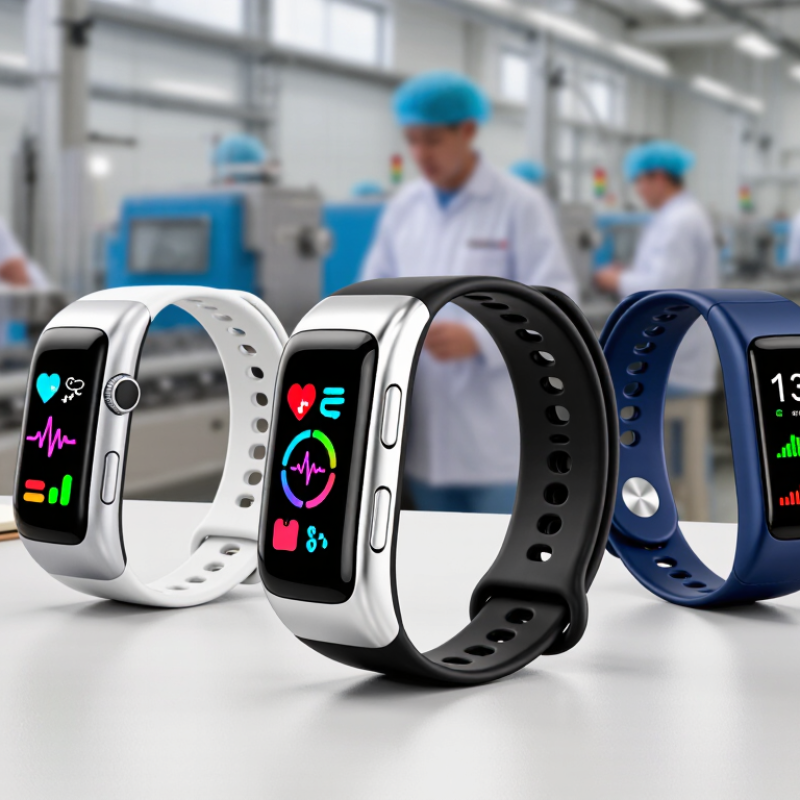
China Best Smart Health Tracker Watch Manufacturer?

What Defines a Smart Health Tracker Watch Manufacturer in China?

China Best Smart Health Tracker Watch Manufacturer?

What Defines a Smart Health Tracker Watch Manufacturer in China?

A capable manufacturer combines engineering experience with disciplined production control. Its team should understand optical heart-rate sensors, motion algorithms, sleep estimation, battery design, and Bluetooth stability. Factory experience matters, but it does not replace evidence. Ask for test records, calibration methods, component traceability, and samples from regular production lines.

A reliable facility checks watches at several stages. Technicians inspect sensor windows, charging contacts, screen response, strap strength, and water resistance. They also test performance during walking, cycling, and uneven wrist movement. Health data can vary with skin contact, motion, temperature, and wearing position. Good manufacturers explain these limits instead of promising perfect readings.

Privacy and regulatory awareness also define professional suppliers. They should document data handling, firmware updates, quality procedures, and market-specific requirements. Standards such as ISO-based quality systems may support consistency, but certificates need verification. A factory audit can reveal more than a polished presentation.

Real manufacturing is not flawless. Some prototype results may fail during mass production. Sampling plans can miss rare defects. Even experienced teams need corrective actions, repeated testing, and clear communication. A trustworthy partner shares problems early, studies root causes, and improves the process with measurable evidence. That honesty is often more valuable than an impressive product catalogue.

Core Health Tracking Features and Sensor Technologies

China Best Smart Health Tracker Watch Manufacturer?

Core Health Tracking Features and Sensor Technologies

The 2024 ACSM Worldwide Survey ranked wearable technology as the top fitness trend. IDC also reported 520.5 million wearable device shipments worldwide in 2023. These figures show strong demand, but shipment volume does not prove health accuracy. A dependable tracker needs carefully selected sensors and transparent testing.

Photoplethysmography uses green and infrared light to estimate heart rate and blood oxygen levels. An electrocardiogram sensor can record electrical heart signals through skin contact. Skin-temperature sensors may reveal nightly changes, while accelerometers and gyroscopes identify steps, movement, and sleep patterns. Bioimpedance can estimate body composition, although wrist-based readings remain sensitive to moisture and strap position.

Small details matter.

A loose strap can distort pulse readings during exercise. Dark tattoos, cold skin, and motion may also affect optical signals. In practical evaluation, manufacturers should compare readings with validated medical equipment across different users. Algorithms must separate resting heart rate from movement noise. Battery performance matters too; frequent charging can create missing sleep data. The World Health Organization reports that adults need regular physical activity, yet a watch should support healthier decisions, not replace professional diagnosis. I would still question any device claiming perfect accuracy. That claim is a warning sign.

How to Evaluate Manufacturing Quality and Product Reliability

China Best Smart Health Tracker Watch Manufacturer?

How to Evaluate Manufacturing Quality and Product Reliability

A reliable health tracker begins with controlled manufacturing, not attractive packaging. IDC’s Worldwide Quarterly Wearable Device Tracker estimated 537.5 million wearable devices shipped globally in 2024. That scale increases pressure on factories to maintain consistency. Ask for batch-level inspection records, sensor calibration results, and traceable component codes. A serious manufacturer should explain how readings are checked before shipment.

Look closely at the production line. Operators should use anti-static stations, calibrated test equipment, and documented work instructions. Request evidence from drop tests, sweat exposure tests, button-cycle tests, and battery aging tests. Counterpoint Research reported 9% year-on-year growth in global smartwatch shipments during the second quarter of 2024. Fast growth can hide rushed quality control. It sometimes does.

Product reliability also depends on software. Firmware should record failed syncs, abnormal heart-rate values, and battery performance after repeated charging. For health-related software, alignment with IEC 62304 principles can indicate stronger development discipline. ISO 9001 certification helps, but it does not guarantee accurate health measurements. Independent validation matters more. No factory is perfect. I would still question any supplier showing only polished samples, because mass production may reveal defects that a demonstration unit never exposes. Ask for a pilot batch, then inspect at least 30 units from different cartons. Compare readings, charging time, screen response, and waterproofing results. Small differences are normal; unexplained patterns are not.

Customization, Certification, and Private Label Service Options

China Best Smart Health Tracker Watch Manufacturer?

Customization, certification, and private label support now shape buyer confidence. IDC’s Worldwide Quarterly Wearable Device Tracker reported 520.1 million wearable shipments globally in 2023. This scale creates opportunity, but quality varies widely.

A capable Chinese manufacturer should customize the case, strap, screen, sensors, firmware, mobile app, packaging, and user manual. Ask for a working sample, not only computer renderings. Check step-count consistency, heart-rate readings, charging temperature, waterproof testing, and battery performance over several cycles. Custom dashboards can display sleep, activity, and wellness trends clearly. However, wellness data is not automatically medical evidence. Product claims must match the intended market and approved testing scope.

Certification requires careful verification. Request current test reports for radio safety, electrical safety, RoHS, REACH, battery transport, and water resistance. ISO 9001 can indicate process control, while ISO 13485 may support medical-device manufacturing systems. Neither certificate alone proves product accuracy. Confirm the testing laboratory, model number, report date, and certification region. Grand View Research has identified strong growth across the smart wearable market, increasing pressure for dependable supply and after-sales support.

Tips: Define the private label package early. Confirm minimum order quantity, logo method, carton artwork, firmware ownership, app data handling, warranty terms, and replacement procedures. A low quotation can hide tooling fees or weak testing. I have seen attractive samples fail during longer battery trials; this is where careful buyers should remain skeptical.

China Best Smart Health Tracker Watch Manufacturer? - Customization, Certification, and Private Label Service Options

Evaluation Dimension OEM / ODM Production Private Label Service Key Verification Point
Product positioning Existing platform, modified product, or fully customized design Existing watch platform sold under the buyer’s name or logo Confirm whether the product is standard, modified, or newly developed
Typical customization scope Housing color, strap, display, firmware, app interface, packaging, and selected sensors Logo, watch face, packaging, user manual, and app branding where supported Request a written customization matrix before placing an order
Common health-related functions Heart-rate tracking, sleep tracking, step counting, activity monitoring, and blood-oxygen estimation may be available Usually limited to functions already supported by the selected platform Sensor availability and measurement performance must be confirmed through technical documentation and testing
Medical-device status Consumer wellness features do not automatically make a watch a medical device Marketing claims must match the product’s regulatory classification in each target market Do not claim diagnosis, treatment, or prevention without the required regulatory authorization
Wireless connectivity Bluetooth Low Energy is commonly used for smartphone synchronization Connectivity normally follows the selected hardware and software platform Verify Bluetooth qualification, regional radio requirements, and mobile operating-system compatibility
Common compliance documentation CE, FCC, UKCA, RoHS, and REACH documentation may be required depending on the destination market Existing reports may be available, but changes to hardware, battery, radio, or enclosure can require reassessment Check report numbers, test standards, product models, and certificate validity
Quality-management capability A supplier may operate under ISO 9001; ISO 13485 is relevant only for applicable medical-device quality systems Quality control is generally based on the supplier’s existing production and inspection procedures Review the certificate scope, issuing body, audit date, and covered manufacturing site
Prototype process Engineering samples can be used to evaluate appearance, firmware, sensors, battery, and fit A branded sample is typically prepared after artwork and packaging approval Approve a golden sample before mass production
Typical development schedule Often several weeks to several months, depending on tooling, firmware, app, and compliance work Usually shorter when the hardware and software platform already exist Obtain a milestone plan covering sampling, testing, production, and shipment
Minimum order quantity Usually higher for new tooling, custom electronics, or dedicated software development Often lower than a fully customized project, but depends on logo, packaging, color, and component requirements Confirm MOQ separately for samples, pilot orders, colors, packaging, and repeat orders
Battery and charging Battery capacity, charging method, operating time, and protection design can be specified within engineering limits Normally uses the existing battery and charging architecture Request battery safety test evidence and verify transport requirements for lithium-ion batteries
Water-resistance claims Ingress protection or water-resistance level depends on enclosure design and test results Claims generally follow the existing model and should not be extended without testing Check the exact test standard and avoid treating water resistance as permanent or unlimited
Software and data services May include mobile applications, cloud services, APIs, firmware updates, and data export functions Software branding and data access depend on the platform owner’s technical permissions Clarify data ownership, privacy obligations, hosting location, API access, and update support
Packaging and documentation Custom box structure, inserts, manuals, labels, barcodes, and multilingual materials can be developed Usually supports logo printing, customized artwork, and private-label manuals Check labeling, importer information, warranty terms, and language requirements for each market
Recommended supplier assessment Factory audit, sample testing, production inspection, compliance review, and after-sales evaluation Sample verification, packaging approval, documentation review, and service-level confirmation Compare documented capability rather than catalog claims alone
Data note: The information above describes common sourcing and compliance practices for smart health-tracking watches. Exact capabilities, lead times, minimum order quantities, certifications, and regulatory obligations vary by product configuration and destination market and should be verified with current technical and legal documentation.

Selecting the Best Chinese Manufacturer for Your Business Needs

China Best Smart Health Tracker Watch Manufacturer?

Selecting the best Chinese manufacturer requires more than comparing factory quotes. In practical sourcing work, I examine sensor calibration, firmware control, and after-sales procedures. A polished sample can hide weak production discipline. Ask for recent factory photos, process records, and test reports. Check whether the documents match the real production line. That gap matters.

Your business needs should guide the evaluation. Confirm minimum order quantities, custom casing options, application development, packaging, and delivery capacity. Request a pilot batch before approving mass production. Test step counting, heart-rate readings, battery life, charging safety, water resistance, and screen visibility. Health-related features also need accurate descriptions and market-appropriate certifications. Data handling deserves attention. Ask how user information is stored, transferred, and protected. Do not accept vague answers.

Communication reveals reliability. Set written specifications, inspection points, revision limits, and response times. A dependable manufacturer should provide clear production updates, not just attractive promises. Independent inspections can verify quantities, materials, and software versions before shipment. I once focused too heavily on unit price and underestimated support costs. That mistake changed my evaluation method. The cheapest offer may require more debugging, replacements, and customer service later. Leave room for improvement. Even a strong supplier may miss a detail during the first production run, so keep feedback measurable and documented.

FAQS

What defines a capable smart health tracker watch manufacturer in China?

It combines sensor engineering, controlled production, and reliable software development. Ask for test records, calibration methods, and component traceability. Experience helps, but evidence matters more.

Which health tracking features should a smart watch support?

Useful features may include heart-rate, blood oxygen, sleep, temperature, steps, and movement tracking. ECG and body composition functions require careful validation. More features do not automatically mean better accuracy.

How do optical sensors measure health data?

Optical sensors use green or infrared light to estimate pulse and blood oxygen. Skin contact, tattoos, cold hands, and movement can affect readings. Loose straps create problems.

Can a health tracker provide perfectly accurate readings?

No device should promise perfect accuracy. Readings may change with temperature, motion, skin type, and wrist position. That claim is a warning sign.

How should manufacturers test health tracking performance?

They should compare watch readings with validated medical equipment across different users. Testing should include walking, cycling, rest, and uneven wrist movement. Repeated testing is necessary.

What production checks indicate strong manufacturing quality?

Look for anti-static workstations, calibrated tools, and documented instructions. Inspect sensor windows, charging contacts, screens, straps, and water resistance. Small differences happen. Unexplained patterns do not.

Why is a pilot batch important before placing a large order?

Prototype samples may perform well while mass production exposes defects. Request a pilot batch and inspect at least 30 units from different cartons. Check charging time, screen response, readings, and water resistance.

How should software and privacy practices be evaluated?

The manufacturer should document data handling, firmware updates, failed syncs, and abnormal readings. Review access controls and retention practices. Certificates can help, but independent verification remains important.

What battery details should buyers examine?

Check charging time, repeated-charge performance, standby duration, and sleep-data continuity. Frequent charging can create missing records. Battery results may vary between samples. That deserves review.

Conclusion

Choosing the best Smart Health Tracker Watch manufacturer in China requires more than comparing prices. A reliable partner should combine strong engineering capabilities, stable production capacity, and a clear understanding of health-focused wearable technology. Important features may include heart rate monitoring, blood oxygen measurement, sleep tracking, activity recognition, fitness data analysis, and other sensor-based functions. Manufacturers should also demonstrate consistent product performance through strict quality control, component testing, software verification, and long-term reliability evaluation.

Businesses should assess whether a manufacturer can provide flexible customization, including casing design, interface development, packaging, logo application, and private label support. Appropriate certifications, traceable production procedures, responsive communication, and dependable after-sales cooperation are equally important. The ideal supplier is one that can meet the buyer’s target market requirements, order volume, budget, delivery schedule, and product positioning while maintaining professional service throughout development and mass production. A careful comparison of technical expertise, manufacturing quality, customization options, compliance documentation, and business support can help companies select a trustworthy long-term manufacturing partner.


Emily

Emily

Emily is a dedicated marketing professional with extensive knowledge of the company’s products, services, and industry landscape. Through a thoughtful combination of market research, customer insight, and clear communication, she helps present complex product information in a practical and engaging......