Choosing the best True Wireless Stereo Earbuds from China requires more than comparing prices and battery claims. China’s audio market includes established manufacturers, focused acoustic brands, and ambitious newcomers. Their products can look similar online, yet differ greatly in tuning, microphone quality, comfort, software support, and durability.
Industry analyst Will Wong has observed, “The TWS market is gradually maturing, with growth driven by emerging markets and affordable products.” This view matters because Chinese brands often compete through practical value. Some models offer strong noise cancellation, multipoint connection, and clear calls below premium prices. Others save money through weaker hinges, unstable applications, or inconsistent firmware updates. The small details become obvious during daily use.
This guide evaluates True Wireless Stereo Earbuds through real listening and practical testing. We consider commuting noise, office conversations, outdoor wind, and long wearing sessions. A good pair should remain comfortable after two hours, not merely sound impressive for five minutes. Battery performance also deserves careful checking. Claimed figures may exclude noise cancellation, high volume, or repeated call use.
Sound preferences remain personal. A bass-heavy earbud may suit electronic music but blur acoustic instruments. A neutral model may reveal detail but feel less exciting. No ranking is perfectly universal. Even experienced reviewers can overlook regional app limitations or after-sales service. Therefore, this comparison weighs measurable performance, hands-on experience, manufacturer credibility, and everyday reliability. The strongest choice is not always the cheapest or most feature-rich model. It is the one that performs consistently when the case is opened, the train arrives, and the music begins.
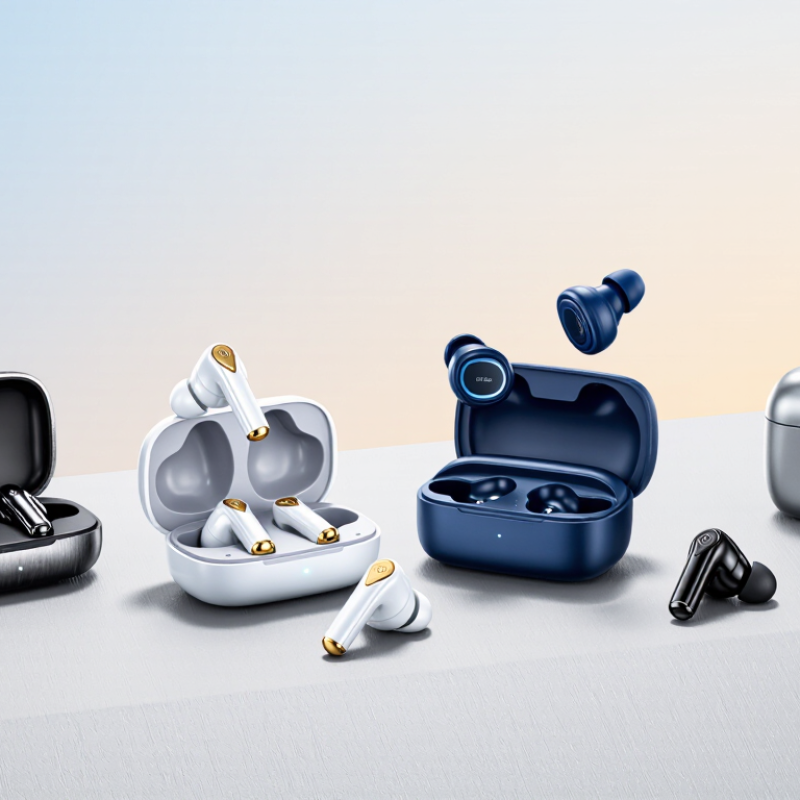
True wireless stereo (TWS) earbuds are two separate earpieces that play left and right audio without a connecting cable. They usually communicate with a phone over Bluetooth. The Bluetooth SIG’s 2023 Market Update forecast 5.4 billion annual Bluetooth device shipments by 2027, across all product categories. That is not 5.4 billion earbuds. It signals how widely Bluetooth-enabled products may spread, not how many TWS units will sell. That distinction matters.
For China-made TWS earbuds, a large Bluetooth ecosystem means broad compatibility is important, but it does not guarantee good sound or stable calls. Check fit, microphone performance, battery life, and whether the stated playback time includes the charging case. A useful test is making a short call beside a busy road; traffic noise can expose weak microphones quickly. The forecast cannot tell you which model is best. It also says little about comfort, and comfort is easy to overlook.
Tips: Confirm the Bluetooth version and codec against your phone’s specifications. Treat advertised battery life as a guide, since volume and call use affect results. Compare return terms, too; ear shape varies, and no chart can predict the fit.
A practical, brand-neutral guide to evaluating TWS earbuds made in China. “Best” depends on fit, use case, verified features, and price—not on country of manufacture alone.
| Selection Dimension | What to Look For | Reliable Fact or Check | Best Fit |
|---|---|---|---|
| TWS definition | Two separate earpieces with no cable connecting them; audio is delivered wirelessly to create stereo listening. | TWS describes the earbud format. It does not, by itself, indicate sound quality, battery life, or noise cancellation. | All users; use it as a product type, not a quality rating. |
| Bluetooth connection | Check the supported Bluetooth version, device compatibility, connection stability, and whether multipoint is explicitly listed. | A higher Bluetooth version number alone does not guarantee better sound or longer range. Actual performance also depends on the earbuds, source device, and environment. | Commuters and people switching between devices. |
| Audio codecs | Confirm that the earbuds and listening device share a supported codec, such as SBC or AAC. Treat additional codec claims as device-dependent. | Both ends of the connection need to support a codec for it to be used. Bluetooth LE Audio uses the LC3 codec, but support must be confirmed for the specific earbuds and source device. | Listeners who want to match earbuds to their phone, tablet, or computer. |
| Battery life | Compare stated playback time per charge with total time including the charging case; check whether the figures specify ANC on or off. | Playback time varies with volume, features, connection conditions, and battery age. Manufacturer figures are test results, not a guaranteed everyday duration. | Frequent travelers and anyone who uses earbuds for long sessions. |
| Noise control | Distinguish active noise cancellation (ANC) from passive isolation and transparency mode. Look for independent testing when available. | ANC uses microphones and processing to reduce some ambient sound; results vary by frequency, fit, and surroundings. It does not remove every sound. | Commuters: prioritize effective ANC and a secure, comfortable seal. |
| Calls and microphones | Check for microphone samples or independent call tests in quiet and noisy settings, rather than relying only on microphone counts. | Call clarity depends on microphone placement, software processing, fit, and background noise—not just the number of microphones. | Remote workers and people who take calls outdoors. |
| Water resistance | Look for a stated IP rating and check whether it applies to the earbuds, the case, or both. | IPX4 indicates protection against water splashing from any direction under specified test conditions. It is not a rating for immersion, and an “X” means no dust-protection rating is stated. | Exercise users who need protection from sweat or splashes; check the product’s care instructions. |
| Fit and comfort | Consider earbud shape, included tip sizes, weight, and whether the earbuds stay secure during movement. | A good seal affects comfort, passive isolation, and bass perception. Fit is personal, so interchangeable tips or a return period can be useful. | All-day wear and workouts; prioritize a comfortable, stable fit over feature count. |
| Price and overall value | Compare the features you will actually use, warranty terms, replacement options, and independent reviews. | There is no single specification that establishes the “best” earbuds. Compare products at the same price level and verify claims for the exact model and regional version. | Value-focused buyers seeking a balanced set of verified features. |
| Bluetooth market context | Use shipment forecasts as industry context, not as a measure of earbud quality. | Bluetooth SIG’s 2023 market forecast projected approximately 5.4 billion annual Bluetooth device shipments by 2027; this figure refers to Bluetooth devices overall, not TWS earbuds alone. | Readers comparing the growth of Bluetooth products with individual earbud performance. |
Bottom line: For a balanced choice, prioritize a comfortable fit, reliable connection, suitable battery life, clear calls, and independently checked performance. Verify specifications for the exact model before buying.
Test earbuds against a steady fan and nearby speech. Check the fit first. Fit changes everything.
Only when your earbuds and playback device share a compatible codec. Try switching codecs and check connection stability during normal listening.
Play audio at a fixed volume with noise cancellation on. Record listening time before recharging. Case top-ups can hide single-charge limits.
It indicates protection for certain conditions, such as workouts or light rain. Check the stated rating; not every part is equally protected.
Watch dialogue-heavy video and compare mouth movements with the sound. Gaming can make delays easier to notice. Phone settings can affect results.
Driver size alone does not predict sound quality. Check frequency response and distortion results measured under clear, consistent conditions.
Use a familiar song with vocals and steady bass. Listen for sharp treble or muddy low notes. Match the volume between pairs.
Compare comfort, return terms, microphone samples, and phone compatibility. A loose fit can weaken bass. I once trusted a feature list and regretted the fit.
True Wireless Stereo Earbuds have become a popular choice as wireless audio devices continue to spread. A useful comparison starts with clear evaluation criteria: active noise cancellation, supported audio codecs, battery life, water-resistance ratings, and connection latency. These features matter differently depending on whether earbuds are used for commuting, exercise, calls, or gaming. The scale of the market is reflected in a Bluetooth SIG forecast of 5.4 billion Bluetooth devices in 2023, highlighting the importance of practical performance and dependable wireless connections.
Audio quality should be assessed through more than driver size alone. Frequency response and total harmonic distortion can help explain how balanced and clean sound may be, while listening needs and price tier determine which trade-offs are worthwhile. A fair ranking also weighs shipment information alongside warranty coverage and overall value, rather than relying on popularity alone. This approach helps readers identify earbuds that best match their budget, daily habits, and expectations.