A GPS Fitness Smartwatch now does more than draw a route across a map. It can record pace, elevation, heart rate, and recovery while you run through a city, hike a ridge, or train far from home. Yet a crowded feature list does not guarantee a dependable watch. Satellite support, battery life, readable maps, and fit on the wrist can matter more than another dashboard metric.
The American College of Sports Medicine’s Worldwide Survey of Fitness Trends for 2025 ranked wearable technology first among global fitness trends. That finding signals broad interest, not proof that every device measures every workout equally well. Dr. Walter R. Thompson, the survey’s lead author, described wearable technology as “the number one trend.” Buyers should still check how a watch performs in their own training conditions. Tree cover, tall buildings, cold mornings, and long routes can expose weaknesses that a product page cannot show. Small details matter.
Market forecasts also point to sustained growth in wearable devices, but forecasts are estimates, not guarantees of product quality. For global buyers, the best choice depends on local map coverage, supported satellite systems, language options, charging access, and clear warranty terms. A bright screen helps at noon. A secure strap helps on a wet climb. Some trade-offs remain: lighter watches may sacrifice battery capacity, while feature-rich models can feel bulky. This guide compares leading options by real-world GPS performance, training tools, comfort, and value, while noting where evidence is limited. No watch is perfect. That is worth remembering.
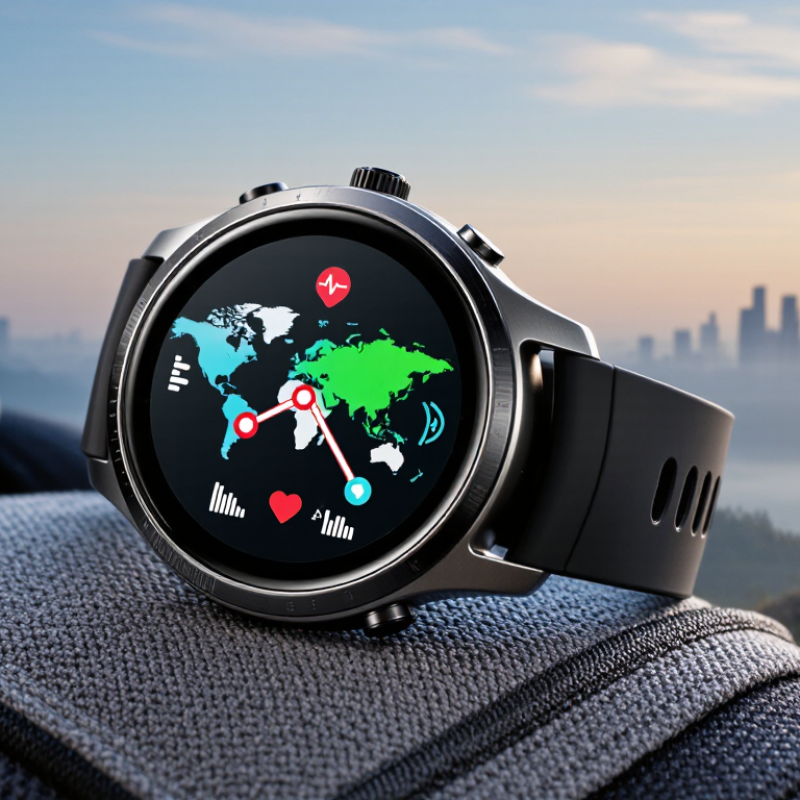
In 2026, a GPS fitness smartwatch is more than a wrist display that records distance. It combines satellite positioning, motion sensors, and training software to show where a workout happened and how the body responded. A useful model locks on quickly near tall buildings, holds a steady track on tree-lined paths, and records pace without requiring a phone. That matters. Multi-band satellite reception can help on difficult routes, but no watch makes every track exact. Small turns may still look jagged on a map.
Fitness features should turn measurements into usable guidance. Heart-rate trends, workout load, recovery estimates, and sleep records can help users spot patterns over weeks, not diagnose illness. Look for clear explanations and adjustable alerts, rather than impressive numbers alone. Battery life needs real-world checking: continuous GPS drains power faster than ordinary clock use, especially with bright screens and frequent navigation. Offline maps, local language support, familiar distance units, and reliable syncing matter to global buyers. Even good data has gaps. Map coverage and some services vary by region, so check the intended country before buying. Comfort matters too; a watch that rubs under a sleeve is unlikely to provide consistent training records. Slightly inconvenient, but true.
A GPS fitness watch receives timing signals from satellites and calculates its position from their arrival times.
It does not need a mobile connection to record an outdoor route. A multi-constellation receiver can use signals from several satellite systems, which may help it find enough satellites in different regions.
Signals need clear sky. Tall buildings, tree cover, canyon walls, and even a sleeve over the watch can weaken reception.
GPS.gov says smartphone GPS accuracy is typically within 4.9 metres under open sky, but that figure is not a promise of watch accuracy. Antenna design, satellite geometry, and local obstructions all matter.
“Global coverage” describes satellite availability, not identical performance everywhere.
EUSPA’s 2024 GNSS Market Report estimates global GNSS downstream revenues at €260 billion in 2023, reflecting how widely positioning technology is used.
For buyers, the practical question is whether a watch supports multiple satellite constellations and maintains a stable fix on familiar routes.
Test it on a wooded path and between buildings, not only on an open track. A route that drifts around a street corner can distort pace and distance.
That limitation is easy to overlook.
Check whether the watch records GPS without a phone, and remember that advertised coverage cannot remove local signal blockage.
A useful GPS fitness smartwatch should make everyday movement easier to understand, not bury it under charts. The American College of Sports Medicine’s 2025 Worldwide Survey of Fitness Trends ranked wearable technology first. That signals strong interest, but more data does not automatically mean better decisions. Look for clear pace, distance, heart-rate, sleep, and recovery summaries. On a dawn run, readable numbers and physical buttons can matter more than colorful animations. Small detail. GPS accuracy also depends on buildings, tree cover, and satellite conditions, so treat pace as an estimate.
Battery life, comfortable fit, and water resistance shape whether a watch stays useful beyond workouts. Check how long GPS tracking lasts, not only the advertised smartwatch battery life. Offline route guidance can help when a phone stays in a bag, while simple alerts support daily routines. The World Health Organization’s 2024 physical activity report estimated that 31% of adults worldwide did not meet recommended activity levels in 2022. A watch may prompt a walk, but it cannot replace practical goals or medical advice. I would still question any device that turns every restless night into a confident recovery score; sleep estimates are imperfect, and context matters. Look for exportable records, adjustable reminders, and privacy settings you can actually understand.
| Feature | What to Look For | Why It Matters | Practical Buying Check |
|---|---|---|---|
| Satellite positioning | Support for multiple GNSS systems, such as GPS, Galileo, GLONASS, BeiDou, or QZSS. | Access to more than one satellite system can help provide positioning options in different regions. | Check which systems are supported and whether they can be used together; availability and performance depend on location and surroundings. |
| Dual-frequency GNSS | Dual-frequency reception, when available, for compatible satellite signals. | It can improve positioning in challenging areas such as dense city streets, though buildings and other obstructions can still affect accuracy. | Look for independent route tests in environments similar to your usual runs, rides, or hikes. |
| GPS workout battery life | Compare the stated continuous GPS recording time with your longest planned activity. | GPS tracking generally uses more power than everyday watch functions. | Review battery estimates for the specific GPS mode you will use; music, maps, screen settings, and multi-band tracking can shorten runtime. |
| Everyday battery life | Check the estimated battery life with your intended notification, display, and health-monitoring settings. | Always-on displays and frequent health measurements can increase charging frequency. | Compare estimates using similar settings rather than relying only on a maximum advertised figure. |
| Fitness activity tracking | Look for profiles for your regular activities, such as running, cycling, walking, swimming, or strength training. | Activity-specific profiles can record relevant workout data and organize training history. | Confirm that the watch records the metrics you need and can export or sync your workout data in a usable format. |
| Heart-rate monitoring | Wrist-based heart-rate tracking, with optional compatibility for external sensors if needed. | Heart-rate data can help monitor exercise intensity and daily trends; wrist readings may be less reliable during some movements. | For higher-intensity training, check whether the watch supports a compatible chest strap or other external sensor. |
| Navigation | Route display, saved courses, breadcrumb navigation, or offline maps, depending on your needs. | Navigation features can help with unfamiliar routes, but not every watch includes full maps or offline map access. | Check map coverage, offline availability, storage requirements, and whether maps work in your destination countries. |
| Water resistance | A clearly stated water-resistance rating suited to your activities. | Water resistance is tested under defined conditions and does not mean every watch is suitable for every water sport. | Check the manufacturer’s guidance for swimming, diving, hot water, and buttons or touchscreens underwater. |
| Display and controls | A readable screen, practical button or touch controls, and adjustable brightness. | Clear displays and easy controls are useful outdoors, during exercise, and in changing light. | Consider screen readability in sunlight, glove use, and whether the interface is easy to operate while moving. |
| Phone and regional compatibility | Compatibility with your phone’s operating system, preferred language, and required app features. | Some functions depend on a paired phone, an app, an account, or regional availability. | Before buying internationally, check supported phone versions, local app availability, warranty coverage, and charging requirements. |
| Everyday health and smart functions | Choose only the features you expect to use, such as sleep summaries, notifications, alarms, or contactless payments. | Feature availability can vary by country, phone, service provider, and local payment support. | Verify regional support and review privacy settings for health data, location history, and connected services. |
Buying note: Specifications and feature availability vary by model and region. Treat battery estimates as test-condition figures, and compare independent reviews for the activities and environments you use most.
A global GPS fitness smartwatch should be judged by real-use battery life, not its longest advertised number. GPS tracking, screen brightness, cold weather, and frequent notifications can all shorten runtime.
Compare estimates under similar settings: continuous outdoor tracking, always-on display, and ordinary daily use. The Bluetooth SIG’s 2024 market update reported annual shipments of 5.1 billion Bluetooth devices across categories, underscoring how common wireless connections are—but broad adoption does not guarantee smooth syncing with every phone.
Check supported operating systems, app availability, and whether workout data exports in a usable format.
GPS accuracy also needs context. GPS.gov says smartphones typically locate users within a 4.9-meter radius under open sky; buildings, trees, and bridges can reduce accuracy.
That figure is a reference, not a promise for every watch or route. For a fair comparison, test a familiar loop with open paths and shaded streets.
Look for stable tracks and reliable distance, not just a sharp-looking map. Small differences matter on short runs.
For durability, inspect the stated water-resistance rating and the conditions behind it. IEC 60529 defines IP enclosure-protection ratings, but an IP code alone does not establish suitability for every swimming or impact scenario.
Check the maker’s activity guidance, strap comfort, and screen readability in direct sun. I would not trust one sunny-day battery test. Repeat it in colder weather, too; that is easy to forget.
Global buyers should also verify local language support, map coverage, and charging compatibility before purchase.
For runners, hikers, and cyclists, GPS performance matters more than a crowded feature list. The American College of Sports Medicine’s 2025 Worldwide Survey of Fitness Trends ranked wearable technology as the leading fitness trend. That signals broad demand, not a guarantee that every watch suits every athlete. Check whether a model records routes reliably under trees, between tall buildings, or on unfamiliar trails. For open-water swimming, confirm that its water-rating and workout modes fit your needs.
Regional support deserves equal attention. A watch may use multiple satellite systems, but reception can still vary with terrain, buildings, and local settings. Before buying abroad, check satellite compatibility, offline maps, language options, and whether emergency features work in your destination. Test the GPS on a familiar route if possible. Small detail. Also compare battery life with GPS enabled, not just the longer figure quoted for ordinary use.
Budget choices involve trade-offs. A basic model may cover pace, distance, and heart rate, while higher-priced options often add detailed navigation or training metrics. Those extras help only if you use them. The ACSM survey measures professional trend rankings, not product accuracy, so treat it as context rather than a buying scorecard. I would rather trust a simple watch that lasts through a long ride than pay for features I rarely open. Still, GPS traces can wander; no wrist device is perfect.
It records workout routes, pace, movement, and body responses such as heart-rate trends.
No. Tracks may wander near tall buildings or under trees. Small turns can look jagged on a map.
Look for reliable route recording, clear pace data, and battery life tested with GPS enabled.
Confirm that the watch’s water rating and swimming workout modes suit your needs. Check the details.
They can reveal patterns over several weeks, but they do not diagnose illness. Treat estimates cautiously.
Check satellite compatibility, offline maps, language options, distance units, and emergency features in your destination.
Not necessarily. Continuous GPS uses more power, especially with a bright screen or frequent navigation.
No. Higher-priced models may add navigation and training metrics, but unused features add little value.
Try a familiar route, including a tree-lined path if possible. One test may not tell the whole story.
A GPS Fitness Smartwatch in 2026 combines location tracking with tools for monitoring workouts and daily activity. Understanding how GPS works, including satellite access and regional coverage, can help buyers choose a watch that records routes and distances reliably. Useful features may include heart-rate tracking, activity modes, sleep insights, notifications, and clear workout summaries, making the device practical both during exercise and throughout the day.
Before choosing, compare battery life under different GPS settings, durability for your preferred activities, and compatibility with your phone and apps. The best fit depends on the sports you practice, where you plan to use the watch, and your budget. Considering these factors together can help global buyers select a comfortable, dependable device that suits their routines without paying for features they do not need.