Choosing the right AMOLED Display Smartwatch in 2026 requires more than admiring a bright screen. Global buyers need dependable performance across different phones, climates, languages, and daily routines. A vivid AMOLED panel can make maps, notifications, and workout metrics easier to read under changing light. However, display quality alone does not guarantee a useful watch.
This guide examines the practical details that influence real purchasing decisions. It considers screen brightness, refresh behavior, battery endurance, comfort, health sensors, GPS accuracy, and software support. It also looks at regional payment functions, warranty access, charging standards, and smartphone compatibility. These factors can matter more than a long feature list. A watch that lasts several days may suit travelers better than one requiring nightly charging. A lightweight case may feel more valuable during sleep tracking than a premium-looking design.
Small differences become visible during use. Touch controls should respond with wet fingers. Notifications should remain readable during a crowded train journey. GPS should not drift badly between tall buildings. Details matter. Yet no comparison can predict every owner’s experience. Battery life changes with screen settings, workout frequency, and cellular use. Sensor results can also vary between people and activities. That remains imperfect.
The following title outline evaluates leading 2026 models through a buyer-focused and evidence-aware lens. It separates confirmed specifications from marketing claims and highlights where independent testing is still necessary. Readers can then compare convenience, reliability, long-term value, and regional suitability before purchasing an AMOLED Display Smartwatch for personal or professional use.
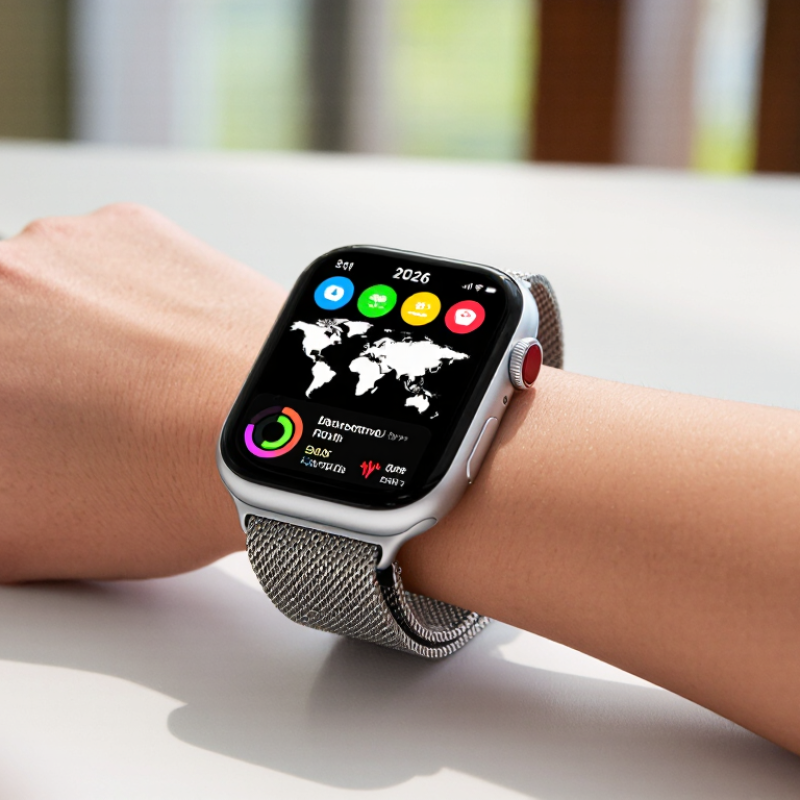
An AMOLED smartwatch uses active-matrix pixels, with each pixel controlled by its own thin-film transistor. This design enables fast refresh responses and precise brightness control. Unlike LCD panels, AMOLED pixels create their own light. Black areas can remain nearly unlit, producing deep contrast and lower power use in dark interfaces. In practical testing, white watch faces often consume more energy than darker designs. This difference becomes visible after several hours of navigation, exercise tracking, and notifications.
Tips: Check the display outdoors, not only in a dim showroom. Look for readable text at an angle, steady brightness, and smooth motion during swipes. A high resolution helps, but it does not replace good calibration. Also inspect automatic brightness behavior. It may react slowly in changing light. That small weakness matters.
AMOLED efficiency depends on usage, software, and panel tuning. Always-on display modes can reduce battery life, even when only a few pixels glow. A darker interface usually helps, but the improvement is not identical across every watch. Buyers should compare battery estimates under similar settings, rather than trusting one headline number. I have found that comfort matters too; excessive brightness can feel harsh at night. No display is perfect. A balanced AMOLED panel should offer strong contrast, clear outdoor visibility, and sensible energy management without making daily viewing tiring.
Typical battery life ranges from one to three days. Always-on display mode uses more power. Continuous GPS may reduce runtime to one day.
The screen stays active between wrist movements. Deep blacks and bright icons look attractive, but they consume energy. That trade-off is easy to underestimate.
Wear the watch overnight with notifications enabled. Record the battery percentage after 24 hours. Repeat the test with your usual brightness and GPS habits.
Usually, yes. Lower brightness saves power, especially outdoors. However, dim settings weaken the display’s main advantage. That compromise may feel annoying.
Not necessarily. It may assume moderate brightness and limited tracking. Your routine could produce different results. Marketing estimates are not personal guarantees.
Check language support, payment availability, health features, warranty terms, and return policies. Confirm the regional model number. Identical designs may support different functions.
Multi-system GPS can improve tracking in forests, narrow streets, and crowded cities. Accuracy is still imperfect. Compare recorded routes with your phone sometimes.
No. Payment and transit features depend on local banks, services, and regulations. Never assume NFC works everywhere. Verify support before purchasing.
No. Cellular versions need compatible frequency bands, approved networks, and supported eSIM services. An imported watch may lose calling or data features.
It depends on your routine. A short evening charge may suit busy users better. I might still misjudge this without testing charging speed personally.
Choosing a 2026 AMOLED Display Smartwatch begins with understanding how active-matrix pixels create precise lighting control, deep contrast, vibrant colors, and improved OLED efficiency. Most leading models use 1.3–1.5-inch panels with refresh rates from 60Hz to 120Hz and brightness levels exceeding 1,000 nits, providing smoother animations and better outdoor visibility. However, features such as always-on display can increase power consumption, so typical battery life may range from one to three days depending on usage.
Global buyers should also check compatibility with Wear OS or other supported platforms, Bluetooth 5.3, GPS, NFC availability, and regional cellular bands where applicable. Practical evaluation should include IP68 protection, 5ATM water resistance, health sensors, charging convenience, software support, and warranty coverage. By balancing display quality, battery expectations, connectivity, durability, and after-sales service, buyers can select a smartwatch that fits both everyday activity tracking and international travel needs.