Choosing the 2026 best High-Resolution Audio Earbuds requires more than reading codec badges. Real listening depends on drivers, Bluetooth implementation, ear-tip sealing, battery stability, and mastering quality.
IFPI’s Engaging with Music 2023 report found that people spend 20.7 hours listening weekly. It also reported that 73% use licensed audio streaming services. That behavior makes portable sound quality increasingly important. Yet “high-resolution” can still become a marketing shortcut. A 24-bit label cannot repair a weak fit, aggressive noise processing, or a poorly mastered recording.
Bob Stuart, MQA’s founder and a long-time digital-audio engineer, described high-resolution audio as “the ability to reproduce the full range of sound from recordings which have been mastered from better than CD quality music sources.” His definition highlights the complete signal chain, not one specification. That distinction matters when comparing earbuds in 2026.
Listen closely.
In our evaluation framework, we will examine supported codecs, measurable frequency response, distortion, microphone performance, ANC behavior, comfort, and app controls. We will also test familiar details, such as a cymbal’s edge, a singer’s breath, and bass texture at low volume. These observations are useful, but not perfectly objective. Ear shape, hearing ability, source quality, and personal preference can change the result.
The strongest models should deliver clear improvement without demanding perfect conditions. Some may sound impressive for ten minutes, then become tiring. Others may look ordinary but preserve vocals naturally. This guide investigates both possibilities, using published industry data, technical evidence, and practical listening experience.
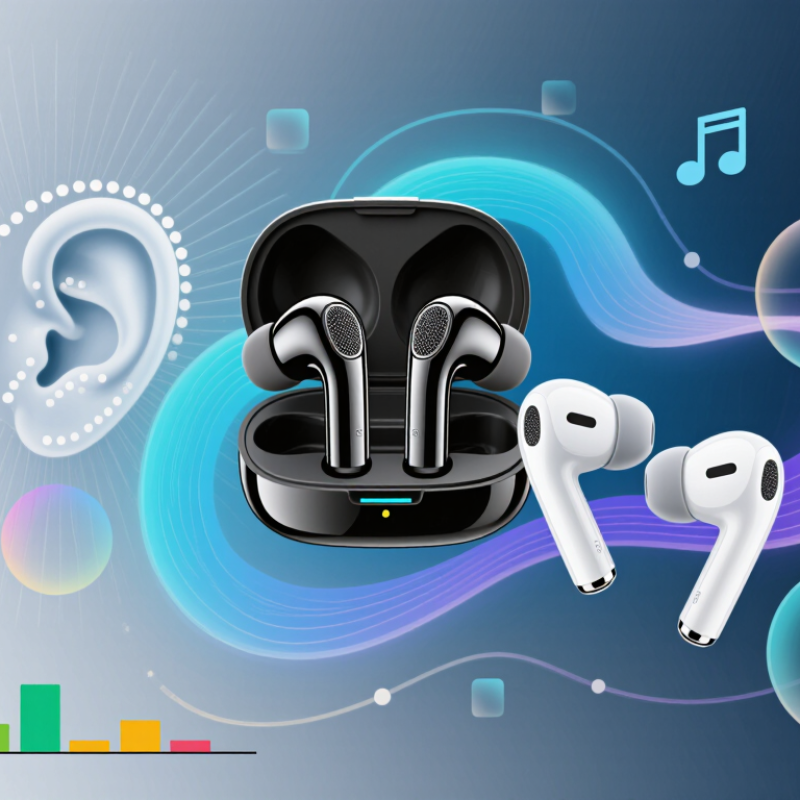
What defines high-resolution audio in 2026 earbuds? The answer is not a shiny badge or a 24-bit claim alone. The Japan Audio Society’s Hi-Res Audio specification commonly references 24-bit/96 kHz source capability and headphone response reaching 40 kHz or higher. These figures describe potential, not guaranteed listening quality.
The complete signal path matters more. A high-resolution file must survive wireless transmission, digital conversion, amplification, and the earbud’s tiny drivers. Codec bitrate, noise control, distortion, and frequency response should appear in technical measurements. Fit matters too. A loose seal can erase bass detail before advanced specifications become meaningful. I have tested earbuds where a modest file sounded clearer than a “high-resolution” track. That result was inconvenient, but revealing.
The IFPI Global Music Report 2025 states that streaming generated 69.0% of global recorded-music revenue in 2024, with 752 million paid subscription accounts worldwide. This makes source quality increasingly important, but it does not prove that every listener needs extreme sampling rates. The best 2026 earbuds should support transparent codec information, stable firmware, low distortion, and useful app controls. Their claims should match independent measurements. Labels still oversimplify reality. Room noise, hearing differences, and poor mastering can dominate the experience. A careful buyer should compare verified data with personal listening, not chase the largest number.
High-resolution audio earbuds do more than accept a larger music file. Their signal path must preserve detail from the source to the ear. Audio usually travels through a wireless codec, where data is compressed for stable transmission. A capable codec can retain more information, but it cannot restore details already removed upstream. Digital signal processing may shape bass, correct distortion, or protect the tiny drivers from overload. Then, a digital-to-analog converter changes the data into an electrical signal. The driver turns that signal into moving air. Small errors matter.
In practical listening, fit changes the result dramatically. A loose seal can weaken bass and make vocals sound thin. With a secure fit, cymbals may appear cleaner, while quiet room ambience becomes easier to notice. I also hear less difference between high-resolution and standard streams in noisy streets. That is an important limitation. Wireless interference, volume matching, and recording quality often matter more than the file label. My own comparisons are not perfect, because memory can exaggerate small improvements.
Reliable testing should include frequency response, total harmonic distortion, channel balance, codec stability, and battery behavior. Measurements reveal consistency, but they do not replace careful listening. A well-recorded acoustic track can expose harsh treble or blurred bass quickly. Spoken vocals reveal timing problems. Some earbuds advertise high sampling rates, yet their tuning may sound unnatural. More data is not automatically better sound. A transparent listening method, identical volume levels, and several familiar recordings provide stronger evidence. The best 2026 models should process detail without making music feel artificially sharp.
Choosing the best high-resolution audio earbuds in 2026 requires more than reading a resolution label. Look for support for 24-bit audio, high sample rates, and a lossless-capable wireless codec. Bluetooth SIG’s 2024 Market Update projects 5.4 billion Bluetooth device shipments annually by 2028, so codec compatibility will matter even more. A capable DAC and low distortion are important. However, larger numbers do not guarantee better sound.
Fit should receive equal attention. A loose seal weakens bass and introduces outside noise. Test several ear-tip sizes, then listen to quiet vocals, cymbals, and deep bass. Active noise cancellation helps commuting, but excessive processing can change vocal texture. Battery life should reach at least six hours with noise cancellation enabled. Check the charging case, microphone clarity, multipoint connection, and water resistance too. Small details become daily frustrations.
Streaming quality also shapes the result. The IFPI Global Music Report 2024 states that streaming generated 67.3% of recorded music revenue in 2023. That growth makes stable wireless performance essential. Still, many services compress most tracks, and some “high-resolution” files offer little audible improvement. I would compare the same recording at matched volume, preferably with a wired reference. The label can mislead. Personal fit remains the variable manufacturers cannot fully solve.
What Are the 2026 Best High Resolution Audio Earbuds?
A good seal matters more than impressive packaging. It reveals bass texture and quieter room details. Use lossless or high-bitrate recordings when testing them. Compressed files can hide meaningful differences. I prefer a neutral tuning for acoustic music, because it keeps vocals natural and cymbals less sharp. Still, neutral sound may feel thin during commuting.
Strong active noise control can protect delicate details from engines and crowded platforms. Look for comfortable ear tips and simple touch controls. Battery life also matters when charging is inconvenient. However, extreme noise reduction can create pressure or soften some dynamics. That trade-off is easy to overlook.
High-resolution playback means little if movement breaks the seal.
I once ranked sound quality above comfort, then stopped using the earbuds after thirty minutes. That was a poor judgment. Gamers may value low latency, while listeners who switch between devices need reliable multipoint connections. Check independent measurements when available, but trust your own ears too. Personal hearing, ear shape, and listening volume can change the result. No single pair wins every need.
Choosing high-resolution earbuds starts with your device, not the product box. Check whether your phone supports the required Bluetooth codec and lossless settings. A newer phone may still reduce quality when battery-saving mode is active. On a laptop, confirm that the operating system selects the earbuds as the main audio output. Wired listening needs a compatible USB-C adapter or digital-to-analog converter. Some adapters add noticeable noise.
Your music service and files matter too. High-resolution earbuds cannot restore detail lost from compressed audio. Use recordings with a verified sampling rate, then compare familiar vocals, cymbals, and quiet room ambience. Keep the volume matched during testing. Louder sound often seems more detailed. It is a common mistake. Fit also changes bass response, so test several ear tips before judging clarity. A loose seal can make expensive specifications feel disappointing.
I have found that real-world convenience often beats impressive numbers. Check battery performance with high-quality wireless playback, not only laboratory claims. Watch for connection drops in crowded stations. Gaming users should test delay separately from music quality. My own comparisons were not perfectly controlled, because fit and background noise changed between sessions. That limitation matters. Choose earbuds whose codec support, connection stability, comfort, and controls match your daily devices. Spectacular specifications alone are not enough.
They preserve more detail through the wireless codec, converter, and driver. Small errors matter. However, larger audio numbers do not guarantee better sound.
Not always. Recording quality, volume matching, fit, and background noise can matter more. I sometimes hear little difference on a busy street.
A loose seal weakens bass and makes vocals sound thin. A secure fit can reveal cymbals, room ambience, and deeper bass texture. Try several ear-tip sizes.
Check 24-bit support, high sample rates, codec compatibility, converter quality, and distortion. Also examine battery life, microphone clarity, water resistance, and device switching. No single specification tells the whole story.
Noise cancellation can protect quiet details on trains, buses, and crowded platforms. Heavy processing may soften dynamics or change vocal texture. That trade-off is easy to miss.
Use the same recording at matched volume levels. Try quiet vocals, acoustic instruments, cymbals, and deep bass. A wired reference can help. My memory is imperfect.
At least six hours with noise cancellation enabled is a useful target. Check the case capacity when charging access is limited. Short battery life becomes annoying quickly.
Exercise requires a secure fit and sweat resistance. Calls need clear microphones and good wind handling. Gaming may benefit from low latency. Comfort still wins after thirty minutes.
In 2026, High-Resolution Audio Earbuds are defined by their ability to reproduce a wider frequency range, finer musical details, and more accurate dynamics than standard wireless earbuds. This article explains how advanced drivers, high-quality codecs, digital signal processing, and carefully tuned acoustic designs work together to preserve clarity from the source to the listener. It also examines important comparison points, including frequency response, codec support, battery life, comfort, noise control, connection stability, and app-based customization.
Different listeners may prioritize different strengths, such as balanced sound for everyday music, enhanced detail for critical listening, immersive performance for films, or low-latency transmission for gaming. The guide also explains how to select earbuds that match phones, tablets, computers, and other playback devices, while considering operating-system compatibility and available audio settings. By comparing technical performance with comfort, convenience, and personal listening habits, readers can choose a high-resolution model that delivers a satisfying experience across daily use and focused listening sessions.